
Last updated November 17, 2026
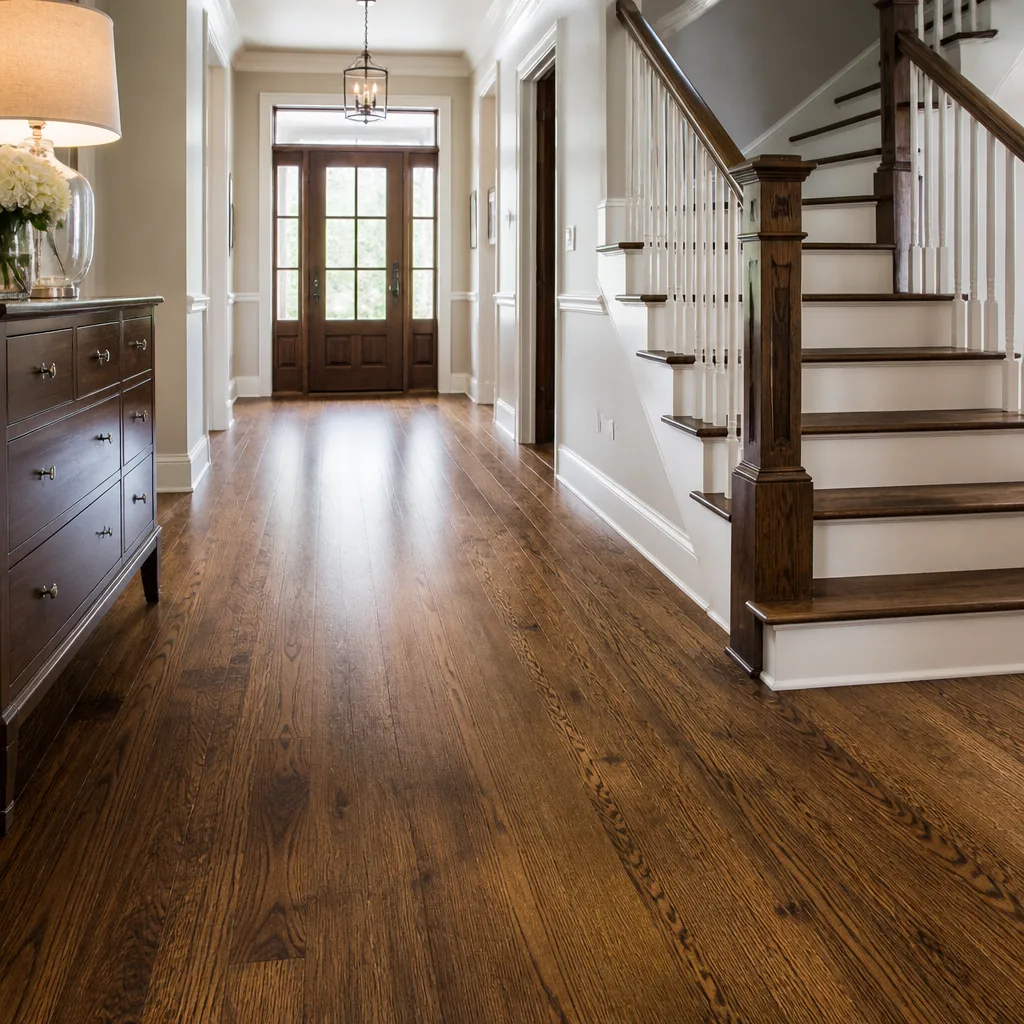 Hardwood
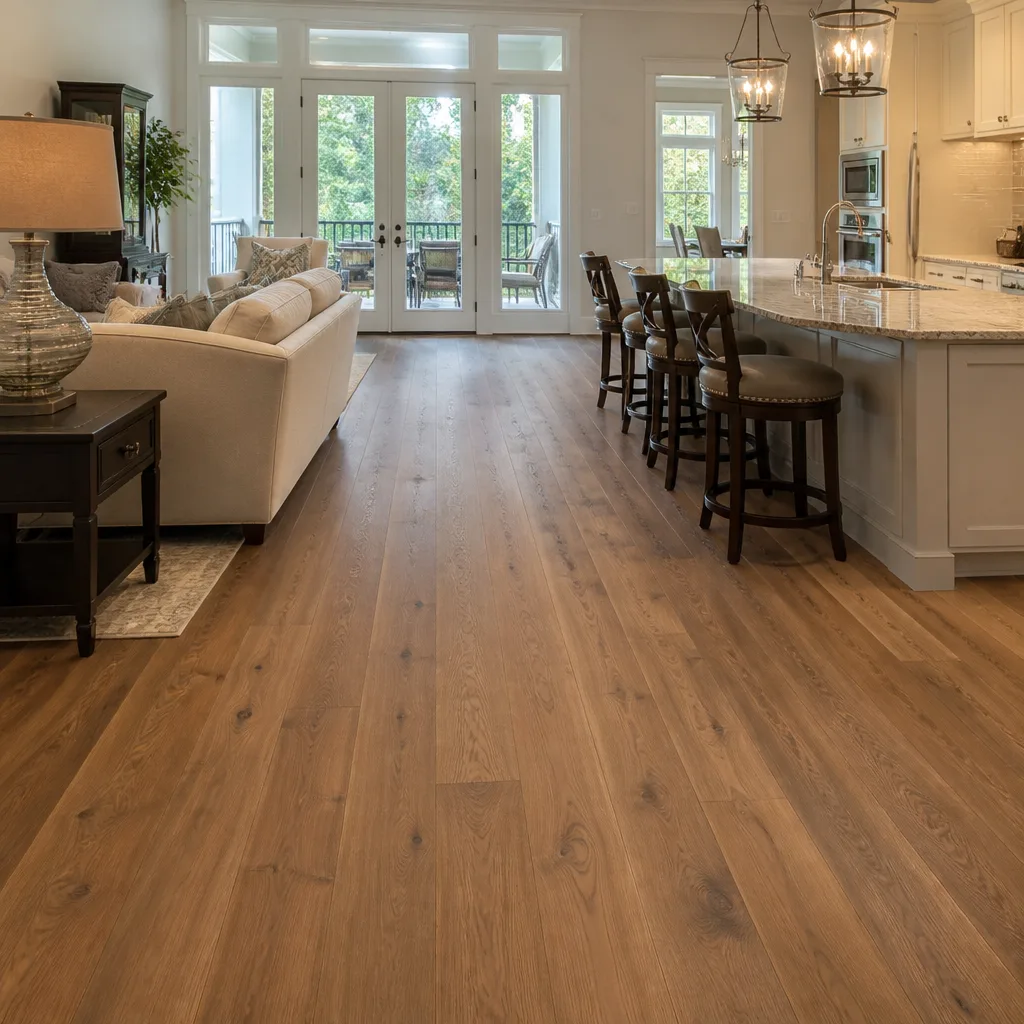 Engineered hardwood
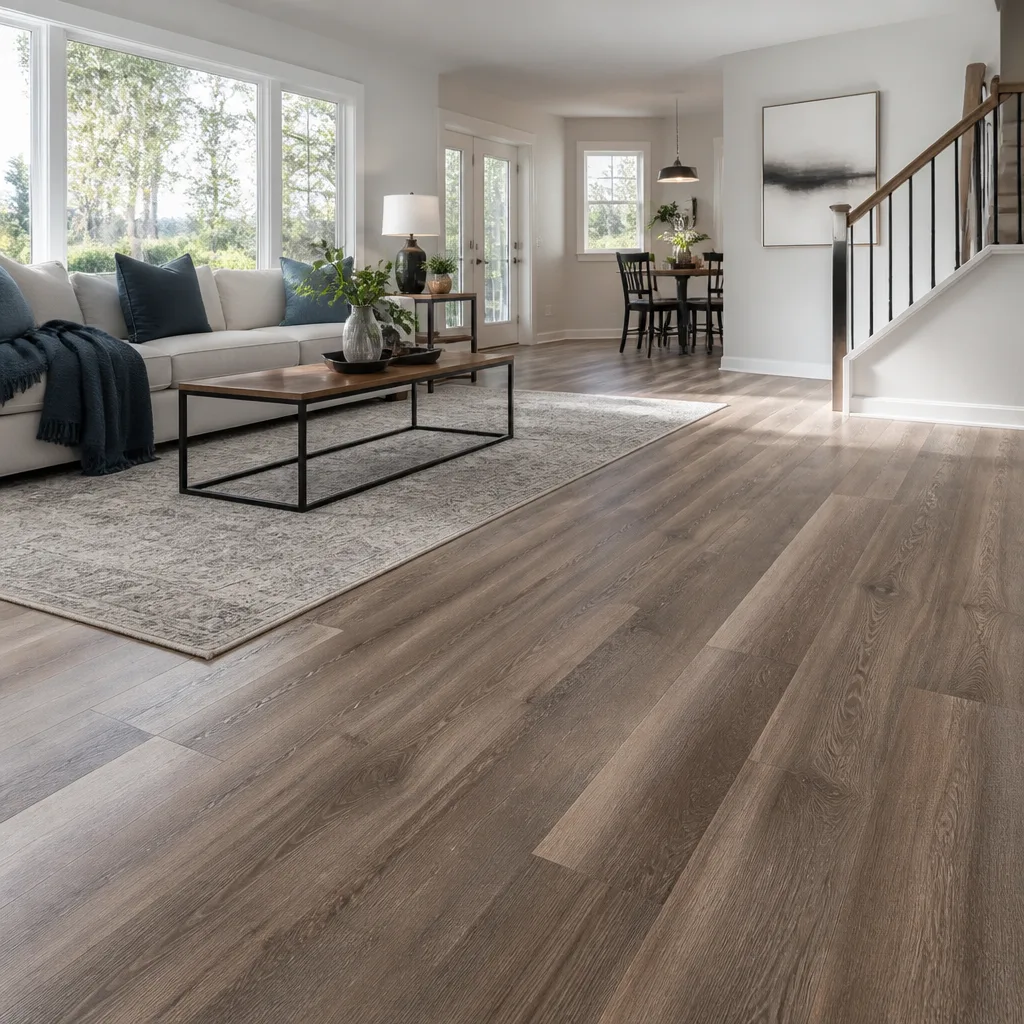 Luxury vinyl plank
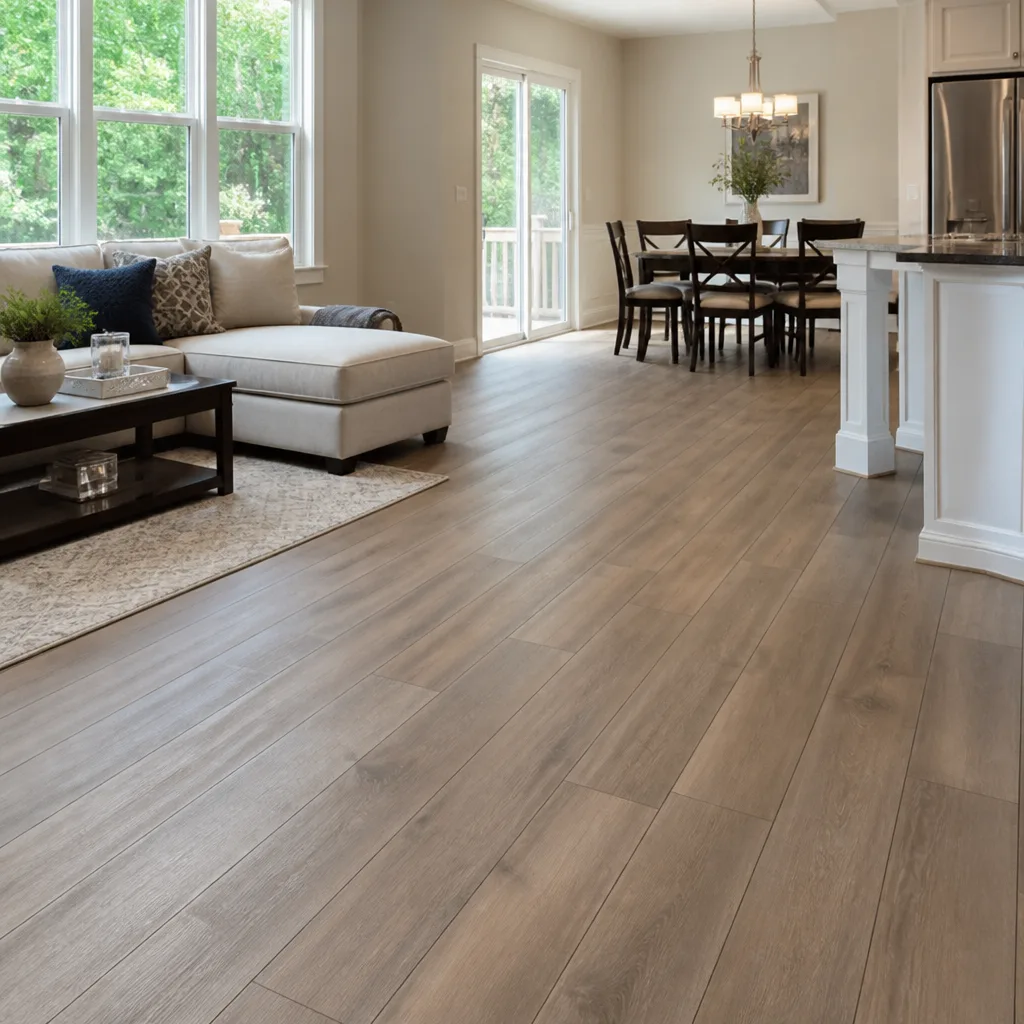 Laminate
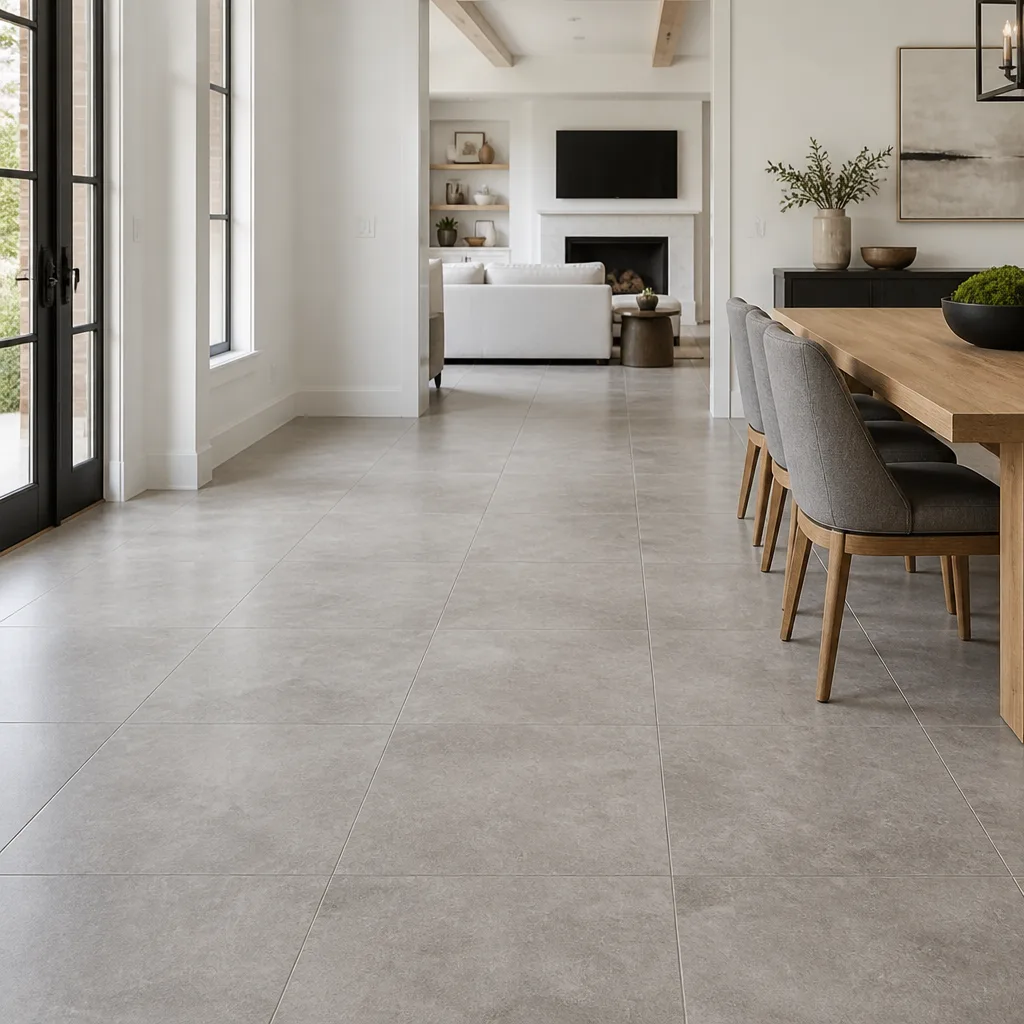 Porcelain tile
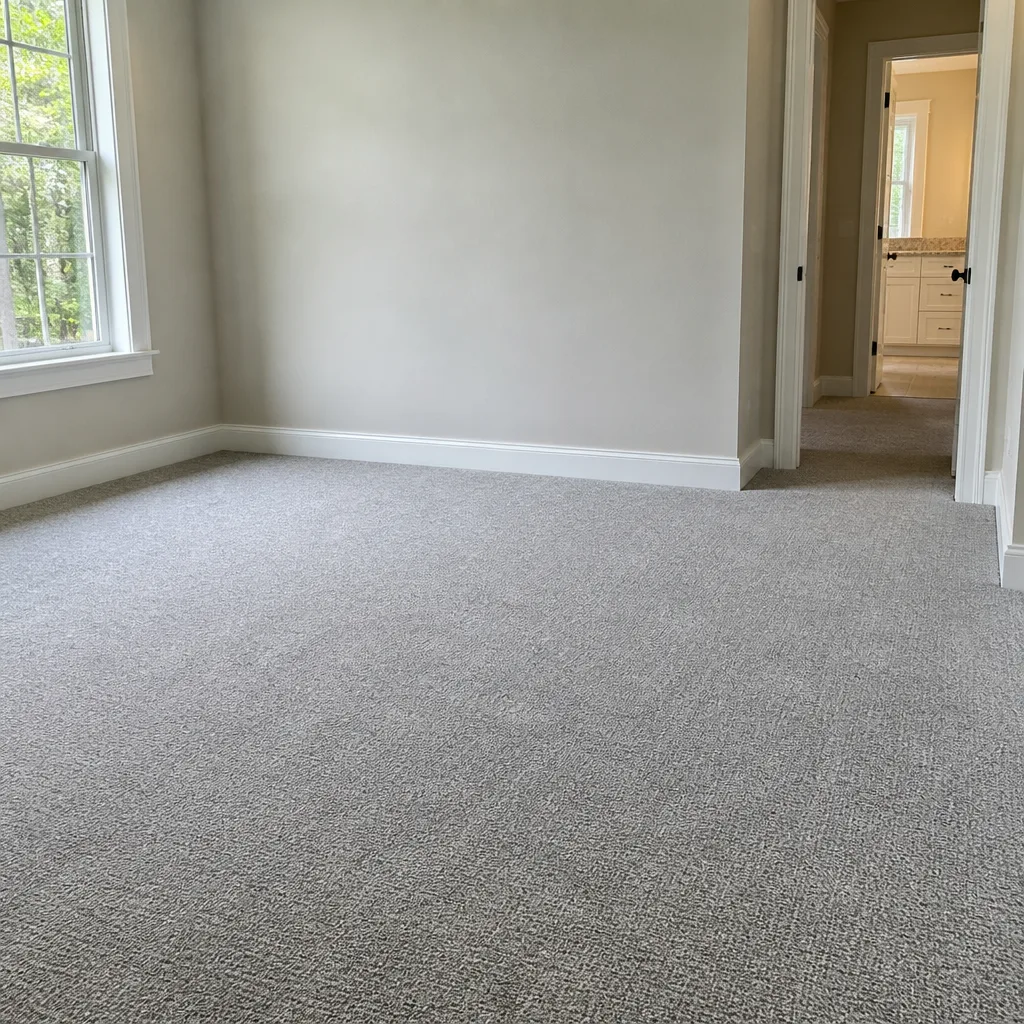 Carpet
 Shaw
 Mohawk
 COREtec
 Pergo
Free in-home measure and written estimate: Shaw, Mohawk, COREtec and Pergo lines compared on your own rooms, with carpet, tile, vinyl plank, laminate and hardwood laid out side by side
Get your free estimateHow Las Vegas’s Climate Can Affect Your Flooring Choice
Most flooring spec sheets are written for a climate far gentler than ours. Las Vegas swings roughly 40°F between a summer day and the same night, holds indoor humidity that often drops under 20% RH, and sits on concrete slabs that push moisture vapor up from below no matter how dry the sky is. That combination disqualifies entire flooring categories before you ever get to pick a color. This guide walks through the specific failure points of each material in the Las Vegas valley – hardwood, tile, carpet, and luxury vinyl – so a floor you install now is still the floor you want in ten years. Las Vegas rewards the homeowner who plans for the environment, not just the showroom sample.
Quick Answer
The best flooring for the Las Vegas climate is engineered hardwood with a thick wear layer, large-format porcelain tile, and today’s fade-resistant luxury vinyl and carpet – provided the installer tests the slab for moisture first and lets the product acclimate. Solid hardwood, thin ceramic tile, and sun-facing floors with no UV protection are the categories most likely to gap, crack, or fade here. The right choice depends on the room, the subfloor, and how much afternoon sun hits the surface.
Styles & brands we work with
- Hardwood
- Engineered hardwood
- Luxury vinyl plank
- Laminate
- Porcelain tile
- Carpet
- Shaw
- Mohawk
- COREtec
- Pergo
Table of Contents
- Why thermal swings matter more here than almost anywhere
- Low humidity: what it does to wood and wood-look floors
- The concrete slab underneath: moisture from below, not above
- Why tile wins in Las Vegas – and which tile holds up
- UV intensity and fading in carpet and luxury vinyl
- Acclimation in a desert climate: the real timeline
- Matching each material to the room
- Common mistakes to avoid
Why Thermal Swings Matter More Here Than Almost Anywhere
A desert day and a desert night are two different climates sharing one address. That daily expansion and contraction is the force behind most of the seasonal flooring complaints we hear about in the Las Vegas valley: buckled boards in August, gapped planks in January, a tile edge that lifts because the grout joined at the wrong moment. The material has to move, and it has to move enough times a year that the movement adds up.
The leading failure modes tied to thermal swings include:
- Hardwood buckling. Solid wood installed tight with no room to expand can press against walls and lift at the center of the run.
- Gaps between planks. In winter, dry indoor air pulls moisture from the wood, and the boards shrink away from each other.
- Tile tenting. Grout and thinset that don’t allow for movement can crack when the slab and tile expand at different rates.
- Seam stress in vinyl plank. Cheap click-lock planks in a room with strong glass exposure flex more than their joints were designed to handle.
What this means practically: the surface that copes best with thermal movement is one that both the material and the installation plan are built to absorb. That generally favors a floating floor with room at the perimeter, an engineered product over a solid one, and a tile installation that treats movement joints as part of the design rather than an oversight. Where the sun hits hardest – west- and south-facing rooms – the swing is greatest, and the margin for error shrinks. A good estimate visit should measure that exposure, not just the square footage.
Low Humidity: What It Does to Wood and Wood-Look Floors
Las Vegas interior humidity often falls under 20% RH in summer and can drop lower when the air conditioner runs hard in a sealed house. Wood is a sponge. In low humidity it gives up moisture, and the planks narrow slightly. Across a 40-foot run, “slightly” is enough to open visible gaps at every seam. This is why a solid hardwood floor that looked perfect at install can look fractured by the second winter.
That reality is why we point most homeowners with a desert home toward engineered hardwood rather than solid. Engineered boards are built with cross-layered plies under a real wood wear layer, which means they move less with humidity swings than a solid board of the same species. The thicker the wear layer, the more times the floor can be refinished down the road – which matters if you plan on keeping the floor for the long haul. Hardwood refinishing is a service we handle directly, and it’s how a well-built engineered or solid floor gets a second life instead of being torn out.
If your heart is set on solid hardwood, here’s what to plan for:
- Add a whole-home humidifier if you don’t have one. Bringing indoor humidity into a more stable range is the single biggest protection for wood in Las Vegas.
- Choose a species with more dimensional stability. Not every wood responds to low humidity the same way.
- Follow the manufacturer’s acclimation and installation instructions exactly. The product paperwork and our written estimate set those requirements for your home, and they should be followed as written.
- Expect seasonal movement as normal. Small gaps that open and close through the year are part of living with wood, not a defect – but a gap that opens and stays open is worth a look.
Luxury vinyl and laminate are less humidity-sensitive than wood, but they still aren’t immune. Water-resistant is not waterproof, and standing water or moisture from below still has to be dealt with. We install the floor the customer chooses, and we’re honest when that choice is the wrong one for a dry desert interior.
The Concrete Slab Underneath: Moisture From Below, Not Above
Here’s the part most flooring buyers don’t anticipate: the biggest moisture threat to a Las Vegas floor isn’t rain. It’s the ground under the slab. Concrete is porous, and moisture vapor moves through it from the soil below, regardless of how dry the surface feels. This shows up as cupped planks, buckled seams, adhesive failure, and mold under the floor months after installation – a problem with no obvious cause until you pull up the surface.
The right way to catch this is moisture testing before any product gets ordered. On a slab, that generally means an in-situ relative-humidity test or an equivalent method appropriate to the product being installed. Here’s how we approach the sequence:
- Assess the slab first. Age, cracks, existing coating, and slab-on-grade versus elevated construction all inform the test approach.
- Test the moisture vapor emission before selection. Not after. A product spec sheet may disqualify the floor once the moisture reading is known.
- Choose a system that matches the slab. That can mean a vapor-barrier underlayment, an adhesive-rated product, or a flooring category better suited to the moisture level.
- Write the plan into the estimate. The estimate should name the prep work, the underlayment, and the product, so nothing gets defaulted to a cheaper option at the install.
Solid hardwood over a high-moisture slab is often a poor combination here, which is one more reason engineered and luxury vinyl get more attention in southern Nevada homes. When we walk a Las Vegas slab at a free in-home measure, testing is part of the appointment, not an upsell. It’s the cheapest insurance against a redo.
Why Tile Wins in Las Vegas – and Which Tile Holds Up
Tile is the most naturally suited hard surface for this city. It doesn’t care about low humidity, it doesn’t swell or shrink with the seasons, and it manages the thermal shock of a hot slab in a way that wood and vinyl can’t match. If you’re choosing a floor for the front entry, kitchen, bathroom, or laundry here, the argument usually starts and ends with tile.
But not all tile is equal in a desert home. Large-format porcelain outperforms thin ceramic in a Las Vegas install for concrete reasons:
- Density. Porcelain is denser and less porous than standard ceramic, so it stands up to temperature movement and moisture exposure with less risk of cracking.
- Larger panels. Fewer grout lines means less surface area for heat-related stress and less to keep clean in high-traffic rooms.
- Better thermal performance. Large-format porcelain spreads and absorbs heat more evenly when a slab warms under afternoon sun.
- Correct installation is everything. A thin, uneven tile bed is where tenting and cracked grout start. Flatness, backer, thinset, and movement joints all have to be planned.
We source tile through tile flooring installation programs that pair Daltile product lines with the installation craft the material demands. Daltile is one of the most specified tile brands in residential construction, and having direct access to it gives us a real range of formats and finishes to work with. If your tile job is a full-room replacement over a slab, our team will test the slab first and step you through the format options that actually fit it.
UV Intensity and Fading in Carpet and Luxury Vinyl
Las Vegas gets more direct sun than almost any metro in the country, and that light doesn’t just heat a room – it bleaches it. Carpet and luxury vinyl are the two categories most exposed to UV fading because they sit in the highest-traffic zones and often take the full brunt of a south- or west-facing window. A carpet that looks fine in a closet can noticeably lighten in a sun-soaked living room within a few years if the fade resistance wasn’t specified.
What actually matters on the spec sheet:
- Fade-resistance or lightfastness ratings. Look for the manufacturer’s stated performance data on UV exposure, and ask us to walk you through how each brand presents it.
- Solution-dyed fibers in carpet. Shaw and Mohawk both build carpet lines with solution-dyed yarns, where the color is set in the fiber itself rather than applied on top. That construction is generally more UV-stable than a surface-dyed alternative.
- UV-cured wear layers in luxury vinyl. COREtec and similar premium resilient products use a factory-applied wear layer, and it’s worth asking about the UV performance specifically on any floor going into a west-facing room.
- Window treatments and low-e glass. The cheapest UV protection is not a flooring upgrade – it’s a shade, a solar screen, or a UV-filtering film on the hottest windows.
Room-by-room honesty matters here. A carpet in a bright, glass-walled great room is a different selection than the same carpet in a hallway, and we’d rather sell you the right carpet installation the first time. When we spec carpet for a Las Vegas home, we ask where the sun hits before we ask about color.
Acclimation in a Desert Climate: The Real Timeline
Acclimation is the process of letting a new floor sit in the room it will be installed in long enough to reach equilibrium with that room’s temperature and humidity. In most of the country, the standard window quoted is 48 to 72 hours. That number assumes a climate with far more humidity stability than ours. In Las Vegas, wood and wood-look floors often need longer – sometimes meaningfully longer – because the indoor environment is drier and swings harder than the product spec sheet was written to account for.
Here’s how acclimation actually works for us in the field:
- The room should be conditioned before the product arrives. HVAC running, windows closed, and the home’s typical interior climate in place.
- Boxes are laid flat and open in the room. Not stacked in the garage. Not in the hall. In the room the floor will live in.
- We follow the manufacturer’s stated acclimation requirement, and we build margin on top of it. The product paperwork and the written estimate set the exact time. We err on the longer side with wood and wood-look products in a dry desert home.
- Testing happens before install, not during. Slab moisture, subfloor flatness, and the room’s moisture level all get checked again on install day.
The reason margin matters is that a board installed before it’s reached the room’s climate will keep shrinking after the install, and by the time you notice the gaps, the trim is already on. Acclimation isn’t a delay to argue about. It’s the reason the floor still looks right in year five.
Matching Each Material to the Room
There’s no single “best” floor for a Las Vegas home – there’s a right floor for each room and each slab condition. This is where the range of brands under one specialist pays off, because you can compare a Shaw carpet against a COREtec luxury vinyl against a Daltile porcelain in the same appointment, not across three showrooms. Here’s the general map we walk homeowners through:
- Living and great rooms: Large-format porcelain tile or premium luxury vinyl. Both handle the sun and traffic, and both are easy to replace in sections if something goes wrong.
- Bedrooms: Carpet still wins here for comfort and quieter footing, but choose a fade-resistant fiber if the room gets strong afternoon light. Shaw and Mohawk both build carpet lines for this kind of exposure.
- Kitchen and bath: Porcelain tile. Low humidity resistance isn’t the concern – it’s the fact that tile shrugs off water and temperature shock without hesitation.
- Formal dining or office: Engineered hardwood, provided the slab tests clean and the room gets a stable interior climate. Hardwood refinishing keeps it serviceable long-term.
- Hallways and entries: Luxury vinyl in a thicker, more dimensionally stable plank. COREtec and Karndean are worth the look here for wear-layer quality.
Where the products live in our portfolio, we approach the selection as a single-source partner: we install and service carpet, tile, and hardwood refinishing, and we supply from nine nationally recognized brands. You shouldn’t have to source three contractors for one floor. For a whole-home renovation, having one point of accountability – Floors Las Vegas – is a real advantage.
Common Mistakes to Avoid
- Choosing solid hardwood without humidity control. A solid floor in a Las Vegas home without a humidifier is a floor set up to gap within two winters. Engineered hardwood gives most homeowners the wood look with less movement.
- Skipping slab moisture testing. It takes an hour, and it’s the single highest-value step before installation. A floor that could have been saved by a vapor barrier is an expensive mistake to learn about after the fact.
- Rushing acclimation to hit a move-in date. A board installed before it’s reached the room’s climate will shrink after the install, not before it. Good acclimation window beats a rushed install every time.
- Ignoring sun exposure in carpet and vinyl selection. A west-facing great room needs a fade-resistant product and, usually, a shade or film on the hottest windows. Design the room’s light load into the flooring choice.
- Choosing thin ceramic over large-format porcelain for high-heat rooms. In a desert climate with strong thermal swings, the density and reduced grout-line count of porcelain is often the smarter bet.
- Treating “water-resistant” as “waterproof.” Luxury vinyl and laminate are water-resistant, but standing water and moisture from below still have to be dealt with. No product replaces a correctly prepared slab.
- Hiring the installer before testing the subfloor. The flooring brand can be perfect and the install can still fail if the slab preparation was glossed over. Prepare first, order second.
See the difference
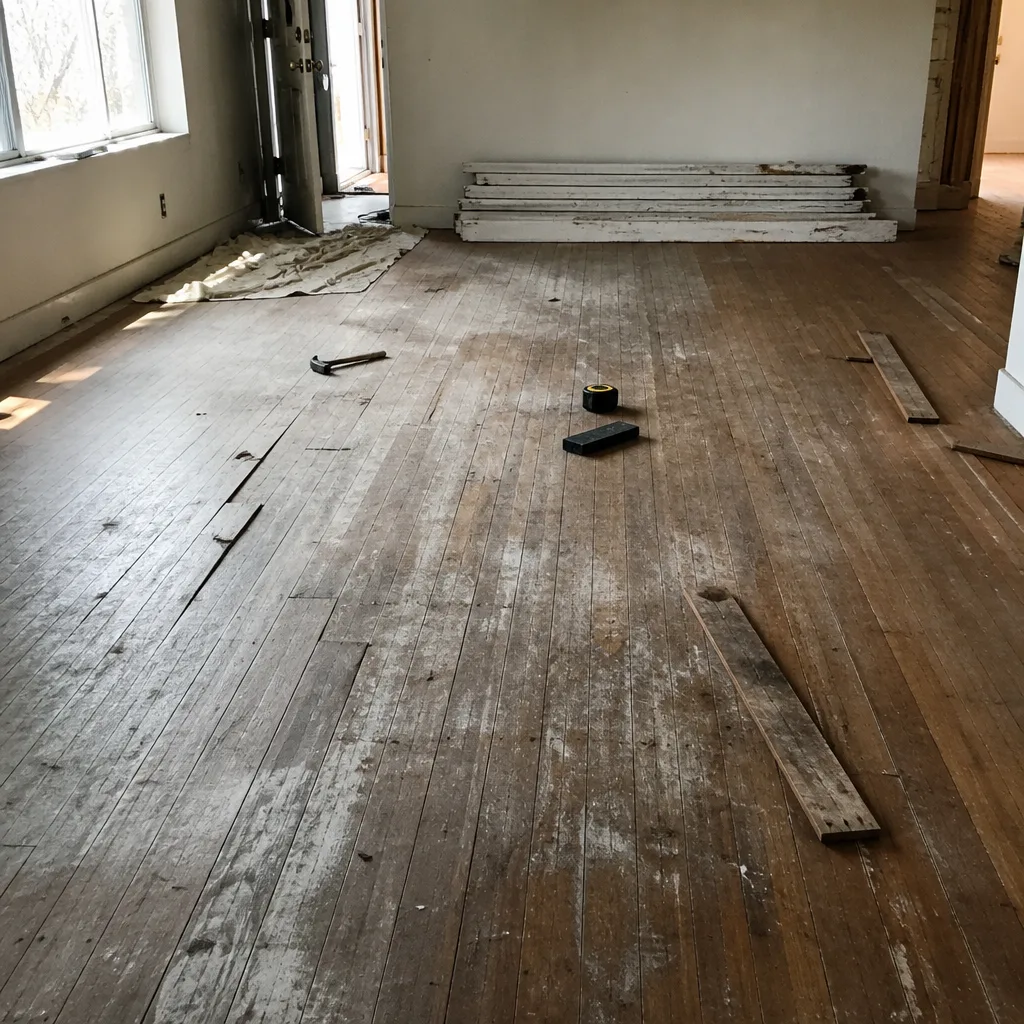 Before
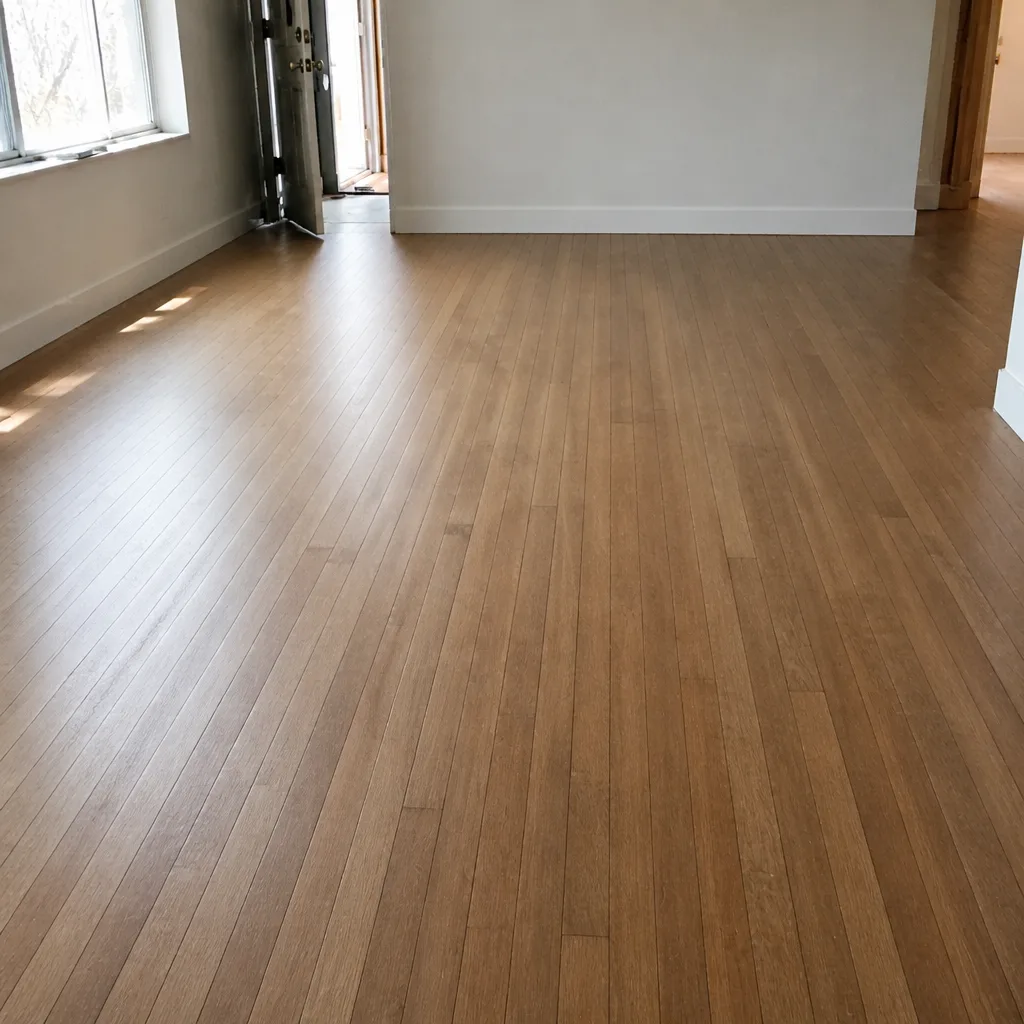 After
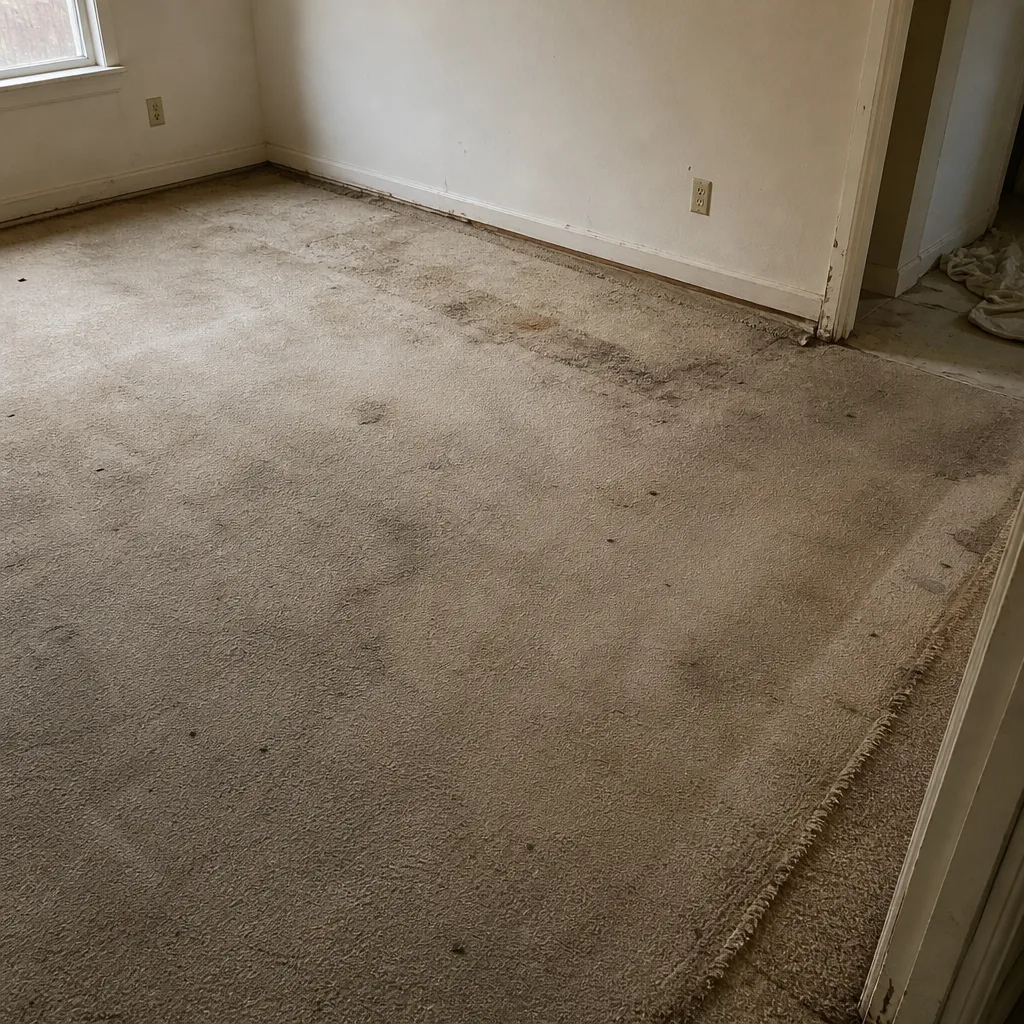 Before
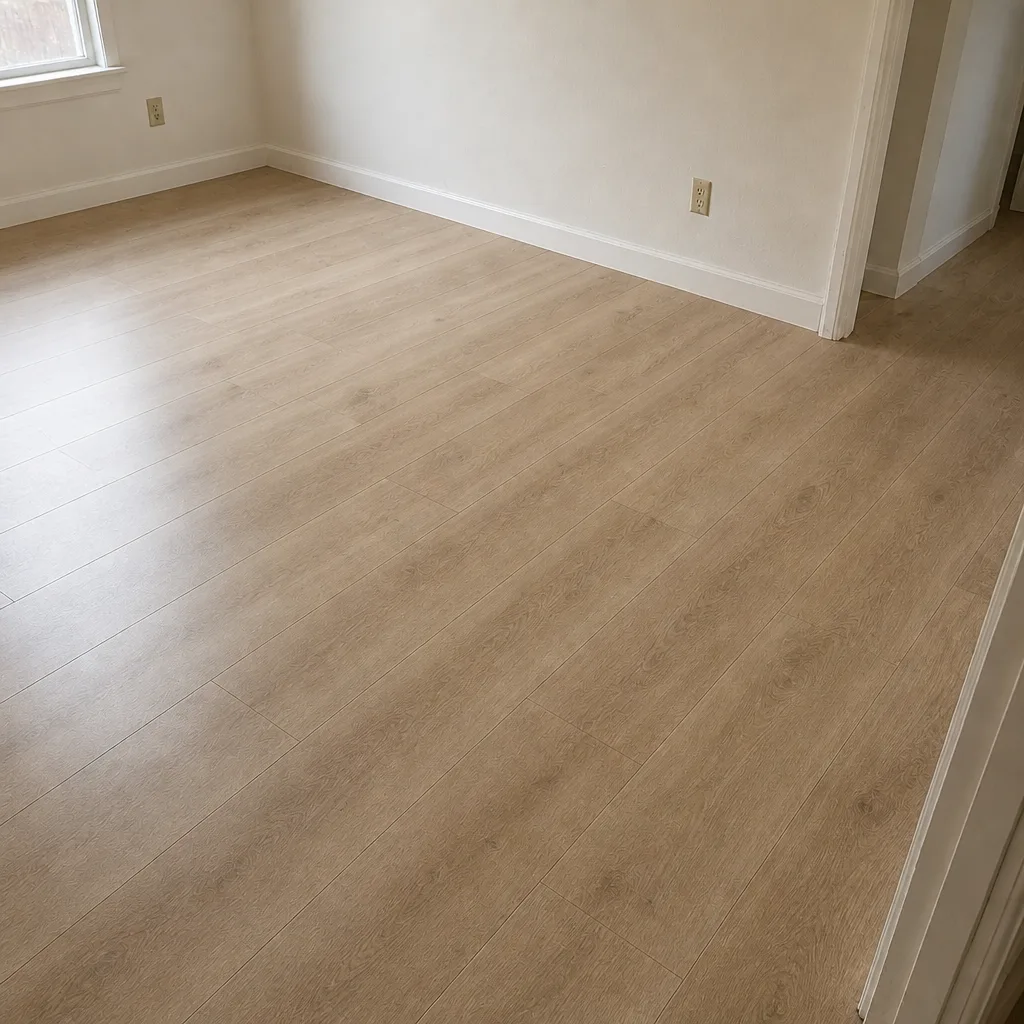 After
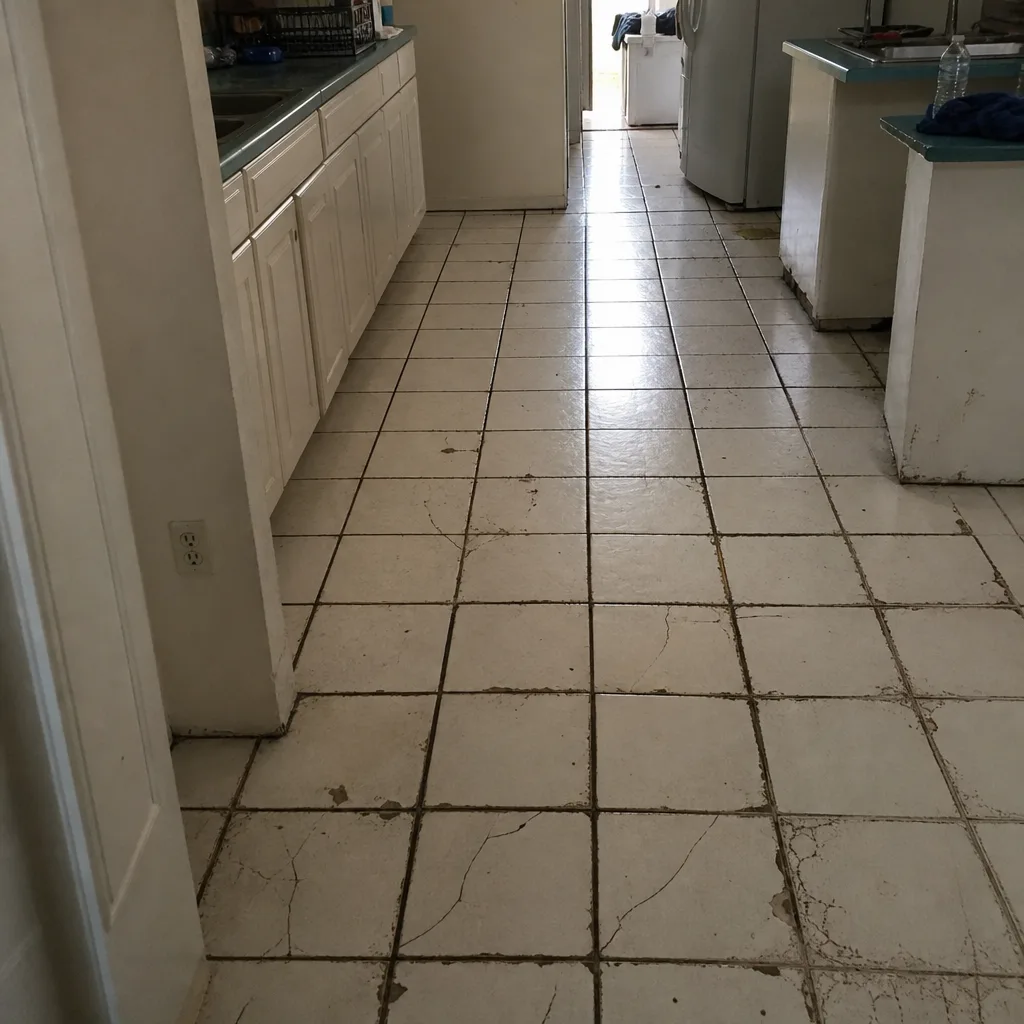 Before
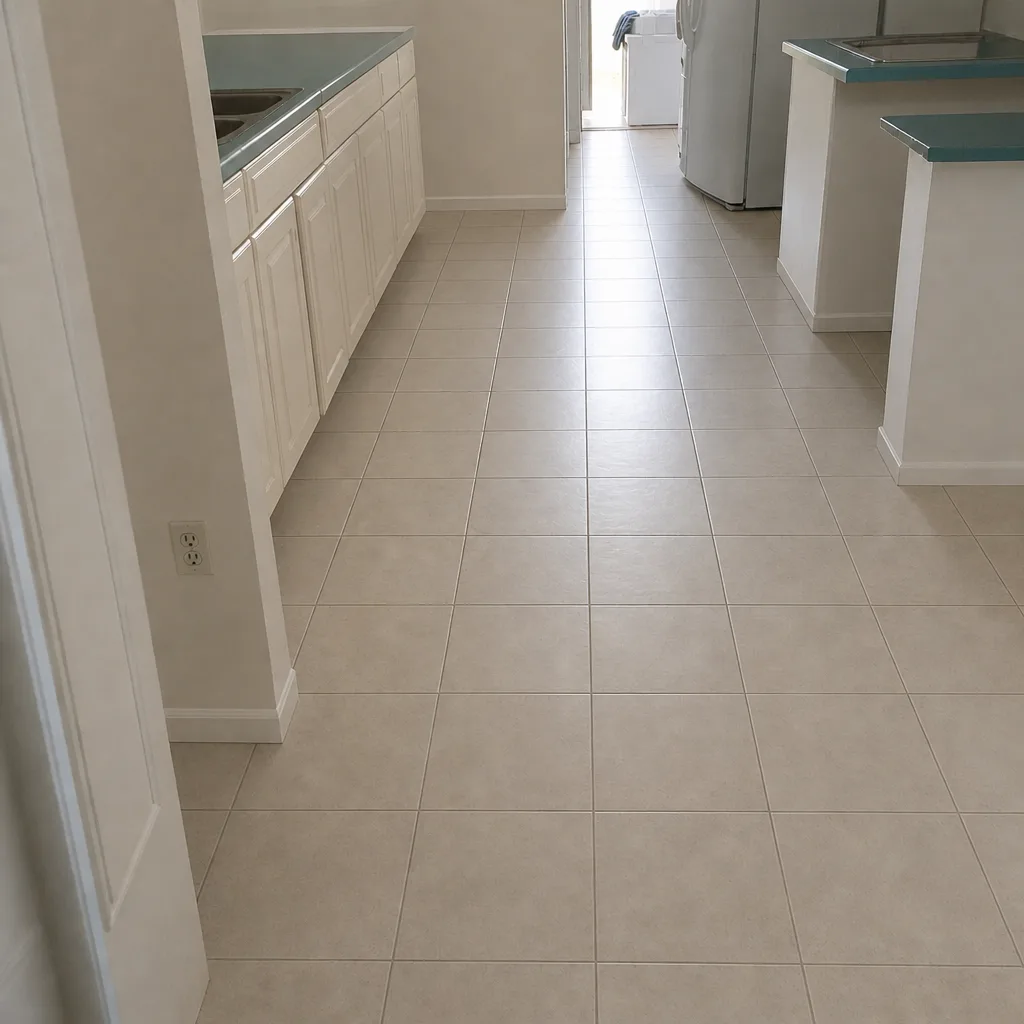 After
When to Call a Professional
Some flooring jobs are genuinely DIY-friendly, but a desert subfloor is not one of them. Call a professional when the floor is going over a concrete slab and moisture hasn’t been tested, when you’re choosing a wood or wood-look product and aren’t sure about acclimation, when a tile floor has cracked or tented at a grout line, when a carpet in a sun-soaked room is fading unevenly, or when you’re planning a whole-home renovation and need the carpet, tile, and hardwood scope to land in a single written estimate. Floors Las Vegas offers free estimates in Las Vegas – call (844) 761-9353. Our technicians have up to 11 years of experience, and our team will measure, test, and talk through the right product for each surface. The estimate is free, the pricing is written, and the schedule is set once the plan is in place.
Frequently Asked Questions
Large-format porcelain tile and engineered hardwood with a thick wear layer hold up best to Las Vegas’s combination of thermal swings and low humidity. Premium luxury vinyl is a strong alternative in high-traffic rooms. The selection still depends on the slab condition and the room’s sun exposure. Call (844) 761-9353 to schedule a free measure and estimate.
Low indoor humidity in winter pulls moisture out of the wood, and the planks shrink slightly. Across a long run, that adds up to visible gaps at the seams. Engineered hardwood and whole-home humidification are the two most common fixes; a gap that doesn’t close in summer is worth a professional look. Call (844) 761-9353 for an in-home assessment – estimates are free.
Yes. Concrete wicks moisture vapor from the soil below, even in a dry desert climate, and that moisture can fail an installation months later. In-situ relative-humidity testing (or an equivalent method appropriate to the product) is the standard step before any slab installation. Floors Las Vegas includes testing in the free in-home estimate – call (844) 761-9353 to get on the schedule.
Yes. Las Vegas gets intense direct sun, and west- and south-facing rooms take the brunt of it. Solution-dyed carpet fibers and UV-cured luxury vinyl wear layers resist fading better than surface-dyed or low-rated products. Ask about the fade-resistance rating specifically for any floor going into a bright room. Call (844) 761-9353 and we’ll walk through the right product for the exposure.
Longer than the 48 to 72 hours most product spec sheets quote, often meaningfully so, because Las Vegas indoor humidity runs low and swings hard. The exact time depends on the product and is set by the manufacturer’s paperwork and the written estimate – we err on the longer side with wood and wood-look floors. Call (844) 761-9353 to talk through the schedule for your install.
You can, but it’s the most common reason tile installations fail. Flatness, movement joints, and slab moisture all affect the final result, and large-format porcelain is unforgiving of a poor preparation job. It’s cheaper to test first than to repair the floor later. Floors Las Vegas offers free estimates in Las Vegas – call (844) 761-9353.
The Bottom Line
Las Vegas’s climate isn’t just hot and dry – it’s a cycle of thermal swings, low indoor humidity, intense UV, and alkaline concrete slabs that will sort out the wrong flooring category before you ever pick a color. Engineered hardwood, large-format porcelain tile, and fade-resistant carpet and luxury vinyl are your realistic starting points. Moisture testing and full acclimation are not optional steps on a desert installation. If you get those right, the floor you install now is still the floor you want in ten years.
For a free estimate, call (844) 761-9353. We answer 24/7. Fast dispatch from 7am to 7pm, Sunday through Friday.
Written by the team at Floors Las Vegas.