
Last updated November 17, 2026
 Hardwood
 Engineered hardwood
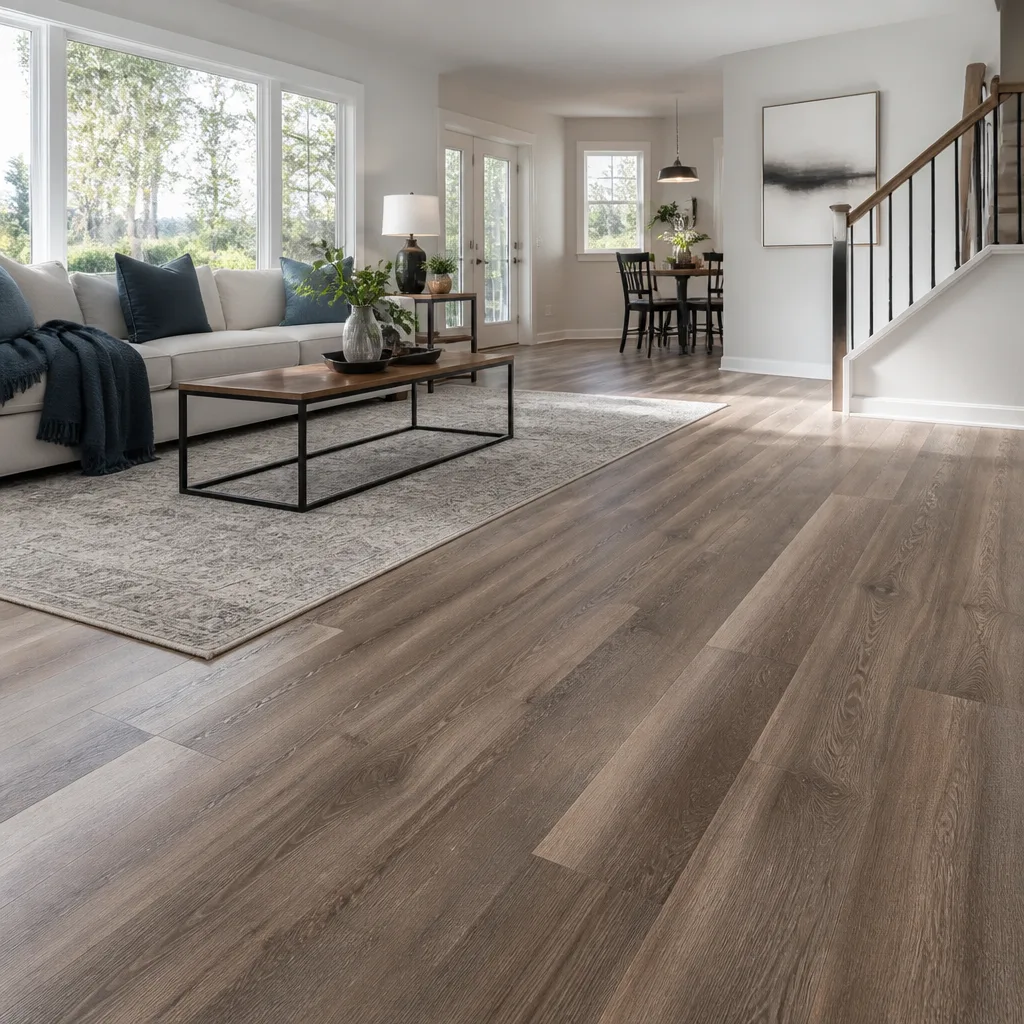 Luxury vinyl plank
 Laminate
 Porcelain tile
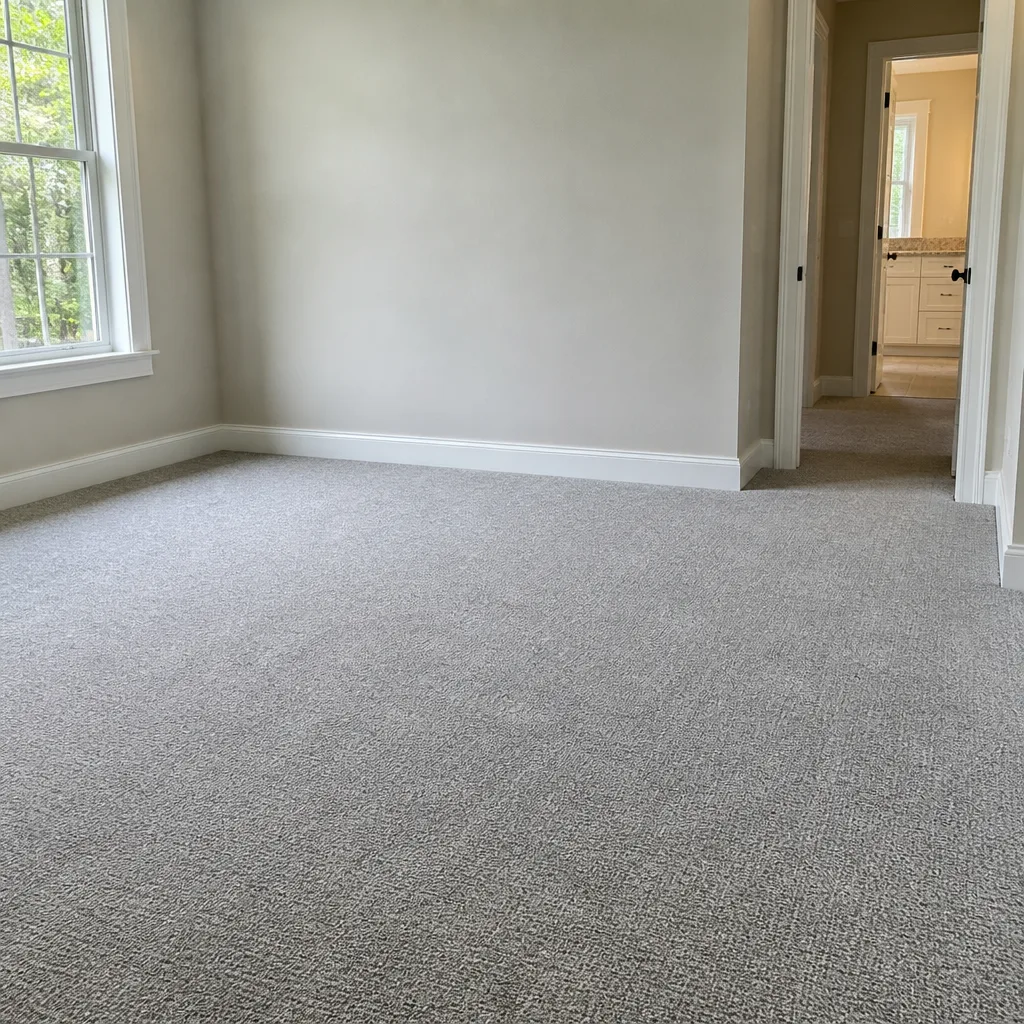 Carpet
 Shaw
 Mohawk
 COREtec
 Pergo
Free in-home measure and written estimate: Shaw, Mohawk, COREtec and Pergo lines compared on your own rooms, with carpet, tile, vinyl plank, laminate and hardwood laid out side by side
Get your free estimateFlooring Installation Questions to Ask Before You Sign
Most homeowners walk into a flooring showroom and open with “What’s the best flooring for my home?” That question hands all the leverage to whoever is standing across the counter, because it invites an answer shaped by what they’re motivated to sell. The questions that actually protect you sound different. “What does your subfloor assessment include, and what specifically triggers an add-on charge?” tells you in a single exchange whether you’re talking to a technician or a closer. Here’s the thing about Las Vegas: the desert climate is brutal on certain floors, the housing stock spans decades of construction quirks, and the installation matters as much as the material. This guide walks through the questions most people never think to ask until something goes wrong.
Quick Answer
Before you sign a flooring contract, get written answers to four things: who is licensed and insured for the work (in Nevada, that’s a C-20 license for flooring), exactly what subfloor conditions are covered in the base quote versus what triggers a change order, how the manufacturer warranty and installation warranty interact and who you call when there’s a problem, and what the contractor’s documented callback process is. Price and timeline are the easy questions. These four are the ones that determine whether you’re protected six months after installation day.
Styles & brands we work with
- Hardwood
- Engineered hardwood
- Luxury vinyl plank
- Laminate
- Porcelain tile
- Carpet
- Shaw
- Mohawk
- COREtec
- Pergo
Table of Contents
- Why Licensing and Insurance Questions Come First
- The Subfloor Question That Prevents Surprise Charges
- Warranty Layering: Who Actually Stands Behind Your Floor?
- Material Provenance: Where Is Your Flooring Coming From?
- Post-Installation Accountability and Callback Process
- Climate Questions Specific to Las Vegas Homes
- Direct Employees vs. Subcontracted Crews
- Common Mistakes to Avoid
Why Licensing and Insurance Questions Come First
Ask any contractor who shows up at your door for their Nevada contractor’s license number, and watch what happens next. A legitimate flooring professional will hand it over without hesitation. A closer will change the subject. In Nevada, flooring installation is a licensed trade, and the license class that matters for most residential flooring work is C-20, which covers flooring and floor covering. You can look up any license number through the Nevada State Contractors Board to confirm it’s active and that the classification matches the work being quoted. Ask for the number, not just the company name.
Insurance is the second half of that conversation, and it’s the half people skip. General liability coverage protects your home if something gets damaged during the job. Ask what coverage amount the contractor carries. Ask whether the installation crews are covered under that policy or whether they carry their own. Ask for a certificate of insurance, and ask whether you’ll receive it before work starts. Workers’ compensation matters too if anyone gets hurt in your home during the job.
Also ask who is actually pulling the permit if one is required for your project. Some flooring work doesn’t require one, but tile in certain wet areas or structural subfloor modifications might. The contractor should know the answer without guessing, and should be the one handling the permit process if it applies.
- Request the license number and the classification that covers flooring work.
- Ask for the general liability coverage amount and a certificate of insurance.
- Confirm whether installation crews are covered under that policy.
- Ask who pulls the permit if one is required.
None of this is adversarial. It’s just the baseline. In our experience across Las Vegas, the contractors who answer these questions easily are the ones you want handling a job that lives inside your home for days.
The Subfloor Question That Prevents Surprise Charges
Here’s the question that saves more money than any negotiation: “What subfloor conditions are included in the base quote, and what triggers a change order?” Almost every flooring quote is built on an assumption about what the subfloor looks like under the old floor. When that assumption turns out wrong, the price changes. What you need to know before signing is where that line is drawn and how the threshold is defined in writing.
Concrete subfloors in Las Vegas homes present specific issues. Slab moisture is a real concern in desert construction, and moisture under a floor can compromise adhesives and certain products over time. Ask whether the contractor will test for slab moisture before installation and whether that test is included in the quote. If high spots or low spots exist in the slab, ask how much leveling is included. If a crack runs across the room, ask whether crack isolation is part of the base scope or an add-on.
Wood subfloors in older neighborhoods bring their own set of questions. How much deflection is acceptable, and how do they check for it? What’s the plan if squeaks or soft spots are found during tear-out? Every quote should state clearly what conditions are assumed and what happens if those assumptions don’t hold.
- Ask how subfloor conditions are assessed before the quote is written, and by whom.
- Ask whether a moisture test on a slab is included.
- Ask how much floor leveling or patching is covered in the base price.
- Ask what the threshold is for a change order – how many square feet of additional prep, how much deviation from flat.
- Ask for that threshold in writing, not as a verbal “if we find something, we’ll let you know.”
Get the change-order threshold into the contract. A number written on a signed page is enforceable. An understanding in the air is not. For tile work in particular, a flat subfloor is critical: our tile flooring installation process starts with the subfloor for exactly this reason.
Warranty Layering: Who Actually Stands Behind Your Floor?
Most homeowners assume the manufacturer warranty covers their floor if anything goes wrong. In reality, there are at least two and often three separate warranties at work: the product warranty from the manufacturer, the installation labor warranty from the installer, and sometimes a retailer or dealer warranty. Each one covers different things, each one has its own claim process, and each one has its own exclusions. Ask which is which before you sign.
The manufacturer product warranty typically covers defects in the material: a seam that fails because the carpet itself was defective, a glaze that chips from a manufacturing flaw, a plank that delaminates. It usually does not cover damage from installation error, normal wear, or failures caused by moisture or subfloor problems. Read the warranty document before you buy, not after your floor has a problem. Ask whether the manufacturer’s written warranty will be given to you at the time of purchase.
The installation labor warranty is the one you should scrutinize hardest. How long does it run? What does it cover specifically – gaps at the wall, carpet buckling, tile lippage, loose planks? What voids it? Many installation warranties exclude problems that emerge from conditions the installer flagged in writing before the job (which is fair), but some exclude things you would reasonably expect to be covered. Ask what voids the labor warranty and get it in writing.
Then ask who you call when there’s a problem. Is it the contractor, the manufacturer, or both? What’s the response window? Is it documented? If you bought through one company and they disappear, does the manufacturer warranty still stand? Under what conditions? This matters on a major purchase, and it matters more on tile or hardwood where replacement costs are high. When it comes to tile, a product made by Daltile has a manufacturer warranty you should read in full before committing.
Material Provenance: Where Is Your Flooring Coming From?
Materials come from three very different places in the flooring supply chain, and where yours comes from affects everything from color matching to warranty validity. The first source is current production stock from the manufacturer, through an authorized channel. The second is discontinued closeout inventory – legitimate material, still under warranty, but no longer in production. The third is third-party liquidated inventory of uncertain origin. Each one has real implications.
Why does it matter? If you’re installing a room of Shaw carpet today and the adjacent bedroom in a year, current stock means you can match the color. Closeout means that color is gone when the dye lot runs out. Liquidator material means you may not be able to replace a damaged tile or plank even months after install. Ask which category your quote falls into, and ask what that means for future matching.
- Ask whether the quoted material is current manufacturer stock, discontinued closeout, or liquidated inventory.
- Ask whether the manufacturer’s written warranty will be honored on the specific product quoted.
- Ask what happens if a single tile or plank needs replacement later and the exact style is unavailable.
- Ask whether you can order a small overage of the same style and dye lot to store for future repairs.
For soft surface – carpet – the practical answer is to order extra. Carpet dye lots vary from production run to production run, and having attic stock in your closet means a repair years from now can actually match. For hard surface, an extra box or two behind the water heater costs little and can save a full-room replacement if one plank gets damaged. Our carpet installation clients hear the overage advice every time.
Post-Installation Accountability and Callback Process
The most telling question you can ask a flooring contractor is what happens if something goes wrong after install day. Every job has a small percentage that need a callback: a seam that opens, a plank that lifts, a tile that sounds hollow. What separates a professional from a fly-by-night operation is how the callback is handled, and whether it’s documented before the job starts.
Ask these specifics: What is the documented process for reporting a problem? Who do you call – the salesperson, a main number, an email address? What response time is committed in writing? For a live problem (water damage behind a floor, a seam that’s opening up), is there a same-day response commitment, or do you wait for a scheduled appointment? A good contractor will have a straightforward answer that includes a name to call and a written window. A weak one will say “just call us” and leave it there.
- Ask for the callback process in writing before you sign.
- Ask for the specific phone number or email to use for post-install issues.
- Ask what the committed callback response window is (for example, a few days vs. a couple of weeks).
- Ask whether the person who handled your estimate will handle your warranty issue, or whether it goes to a different department.
- Ask how long after installation the callback obligation applies.
A written callback process is a real commitment. It’s also a signal that the contractor expects to be around when the warranty window opens. Keep the number. Get the email confirmed on the contract. That’s what protects you when the floor isn’t perfect three months after the last installer leaves.
Climate Questions Specific to Las Vegas Homes
Las Vegas is a high-desert climate with extreme summer heat, dry air most of the year, and a monsoon season that can deliver sudden humidity and moisture in short bursts. That climate matters for flooring in ways a generic quote won’t address. If you’re comparing contractors in Las Vegas, ask climate-specific questions and see who answers with substance.
For hardwood, the humidity swings matter. Wood expands and contracts with seasonal moisture changes, and in Las Vegas that means from very dry to suddenly humid when a monsoon rolls through. Ask what the recommended indoor humidity range is for the specific hardwood being installed and whether a whole-home humidifier should be part of the plan. Ask whether the hardwood being quoted is engineered or solid, and how each type handles seasonal movement in this climate. A proper Las Vegas installer knows which woods perform best in desert homes and which will cup within a season.
For tile, slab issues are the climate question. Concrete slabs in Las Vegas homes can shift and crack in response to soil movement and temperature variation. Ask what crack isolation the installer uses under tile and whether it’s included in the base quote or added on. Ask how they handle expansion joints in large tile fields.
For carpet, the heat is the primary concern. Carpet in direct sun through a west-facing window will fade faster here than in cooler climates. Ask about UV-resistant carpet construction for sunny rooms specifically. For luxury vinyl products like Karndean, ask how the material handles high indoor temperatures in a home that’s left without AC for part of the year. Good questions. The right installer has real answers.
Direct Employees vs. Subcontracted Crews
Ask who will actually be in your home installing the floor. It’s a fair question and a revealing one. Some flooring companies use direct employees for installation. Others subcontract the labor to independent crews. Both models exist in the market, and each carries trade-offs a homeowner should understand before signing.
Direct employees are trained under the company’s standards and the company controls how the work is done, how subfloor issues are handled, and how the warranty obligations get fulfilled. Subcontracted crews may be excellent – many are – but the relationship between the retailer and the crew adds a layer of accountability. If the crew does something wrong, is the retailer going to stand behind it, or point at the crew?
Neither model is automatically better. What matters is that you know which one you’re getting and that the warranty discussion covers the crew. Ask directly: “Will the installers be your employees or independent contractors? If a problem comes up, is the warranty handled by you regardless?” Get the answer on the contract. When you’re considering a specific job like Floors Las Vegas service or comparing local providers, that clarity is part of the evaluation.
One more crew question: how many people will be on the job, and how will they access your home (through the front door, the garage, a patio slider)? Good staging keeps the mess contained and protects other surfaces. Know who’s coming and what path they’ll use before install day.
Common Mistakes to Avoid
We’ve seen homeowners make the same handful of errors on flooring projects across Las Vegas. Here are the ones that cost the most, in time and money.
- Signing a quote without a written subfloor scope. The base quote is only as good as its assumptions. Ask what triggers a change order, in writing, before you sign anything.
- Ignoring the warranty documents until after install. Read the manufacturer warranty and the installation labor warranty before signing, not after a problem emerges. The exclusions are the whole story.
- Buying closeout material without understanding the matching risk. A discontinued tile color is a gift on price and a nightmare in a year when a slab cracks or a glass drops. Order overage if you can.
- Letting the crew arrive without a documented callback process. A verbal “just call us” is not a callback process. Get a number, an email, and a written response window.
- Forgetting about slab moisture on a concrete floor. In Las Vegas desert construction, slab moisture testing before installation isn’t optional for many product types. Ask if it’s included.
- Not asking who’s actually doing the install. Direct employee or subcontractor – know which, and know how the warranty covers each.
- Assuming price is the only negotiable. The subfloor threshold, warranty terms, and even the callback window are all open to discussion. Better to negotiate those than shave the material budget.
See the difference
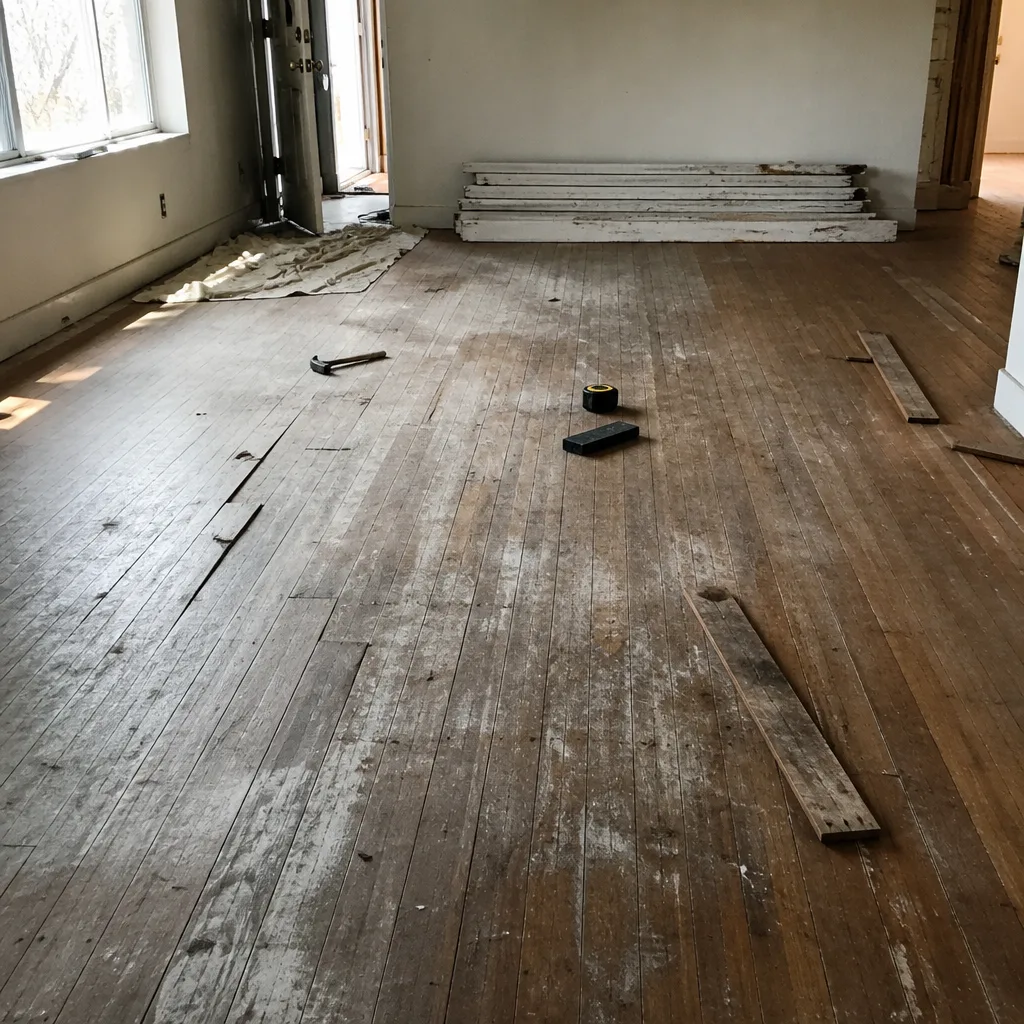 Before
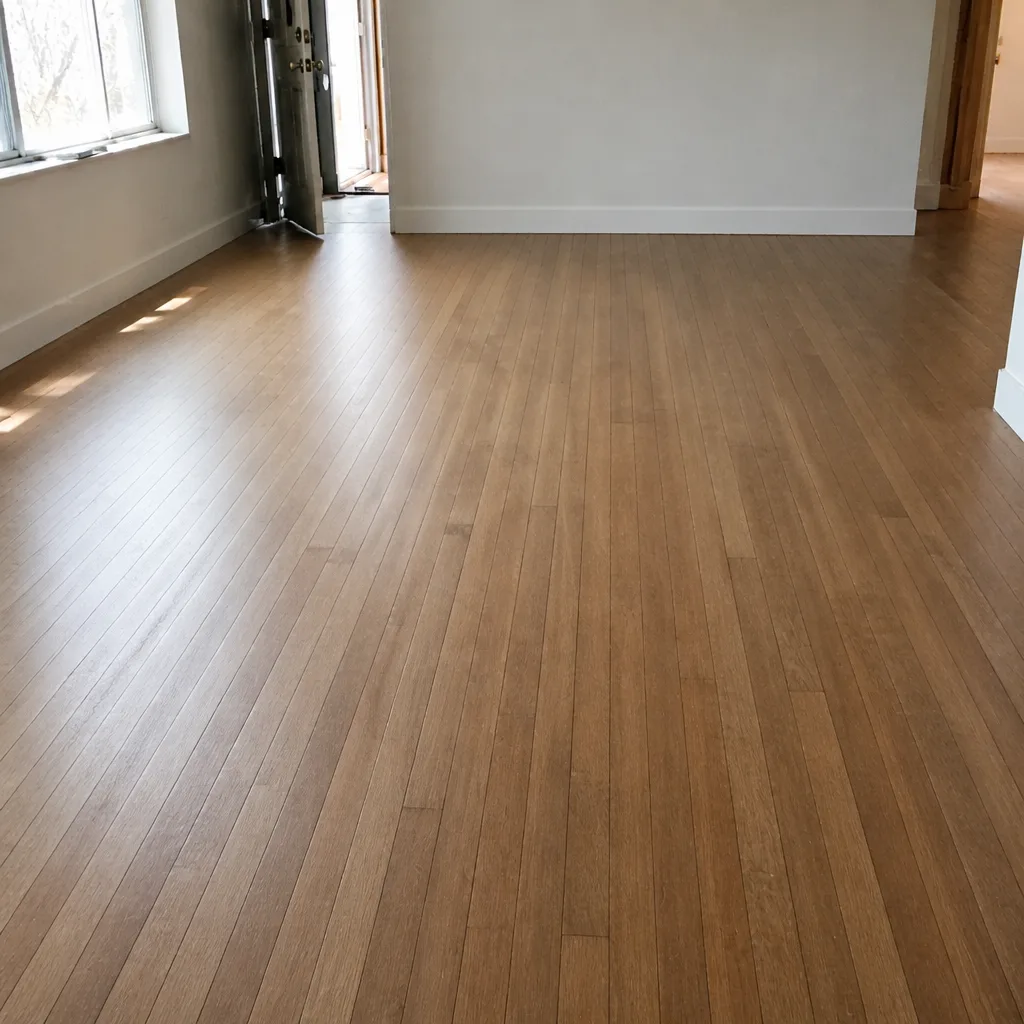 After
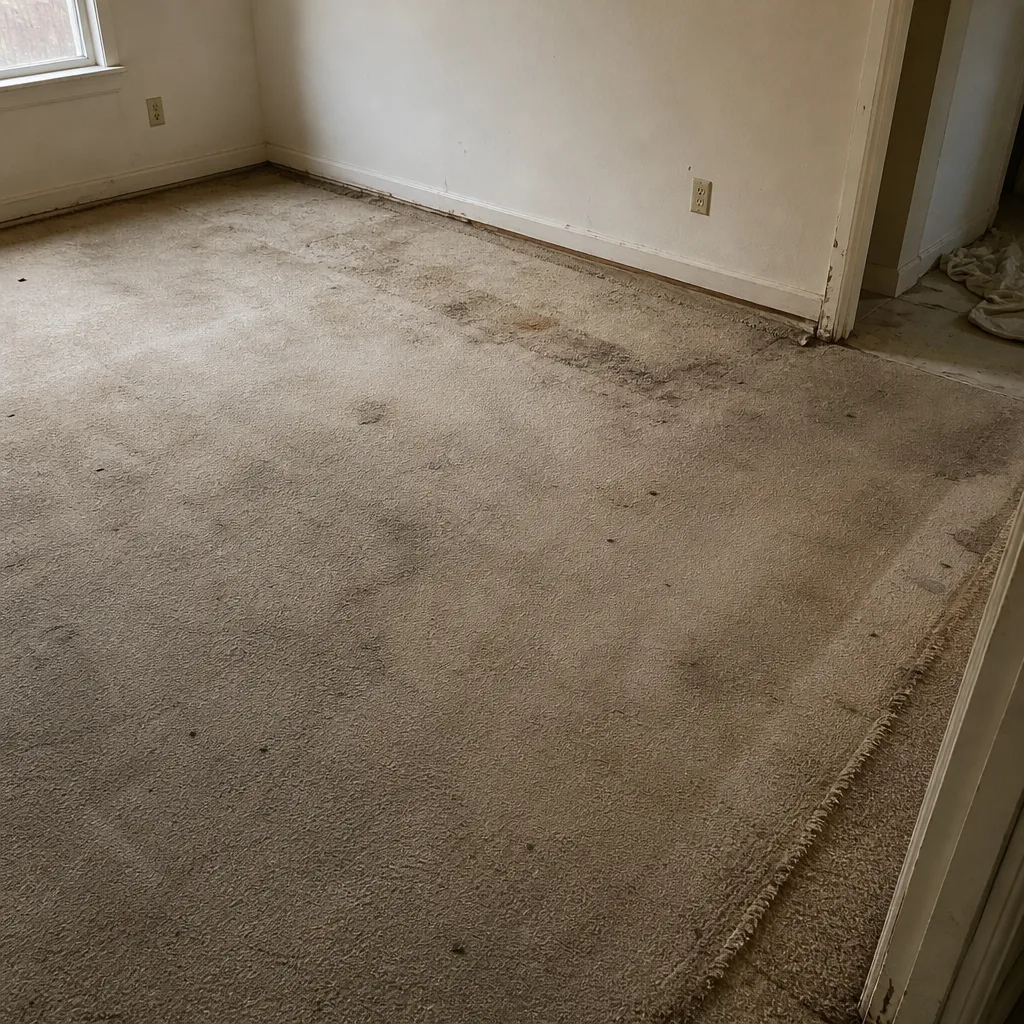 Before
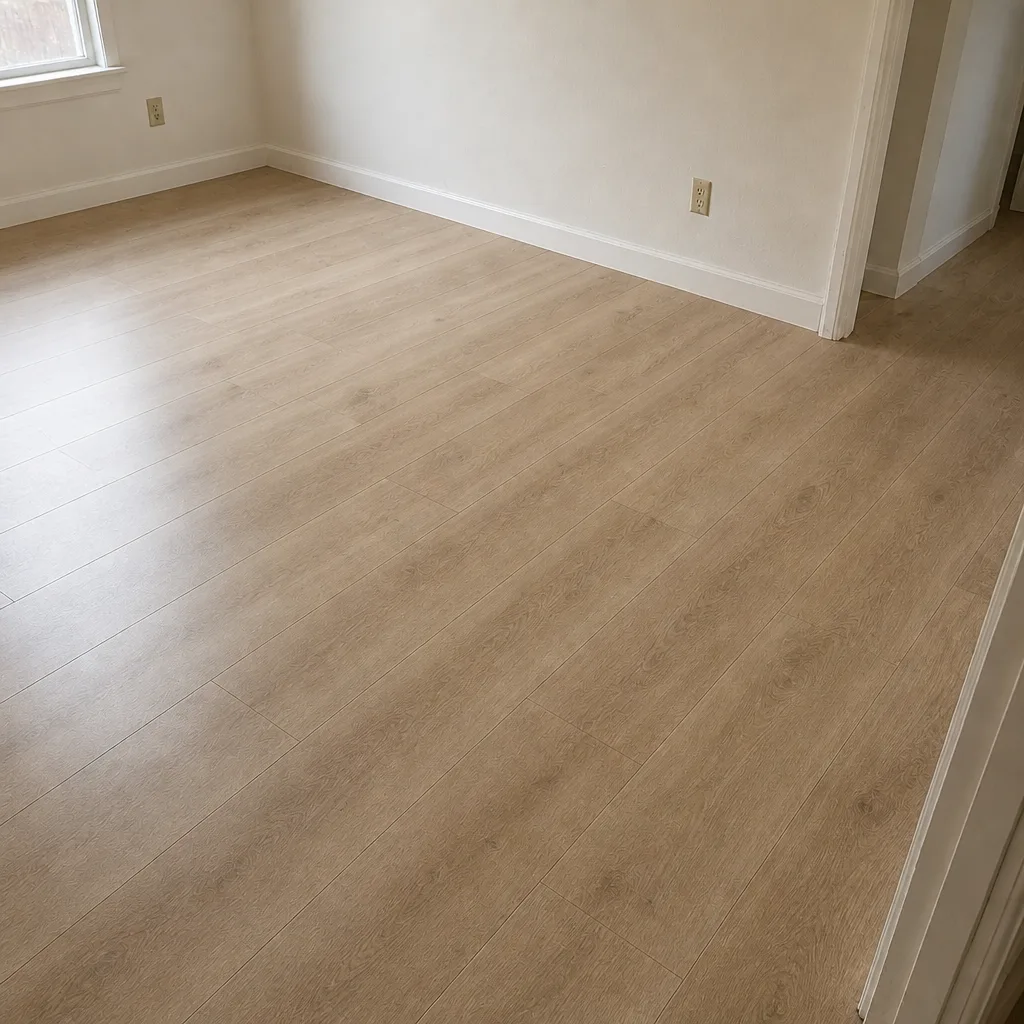 After
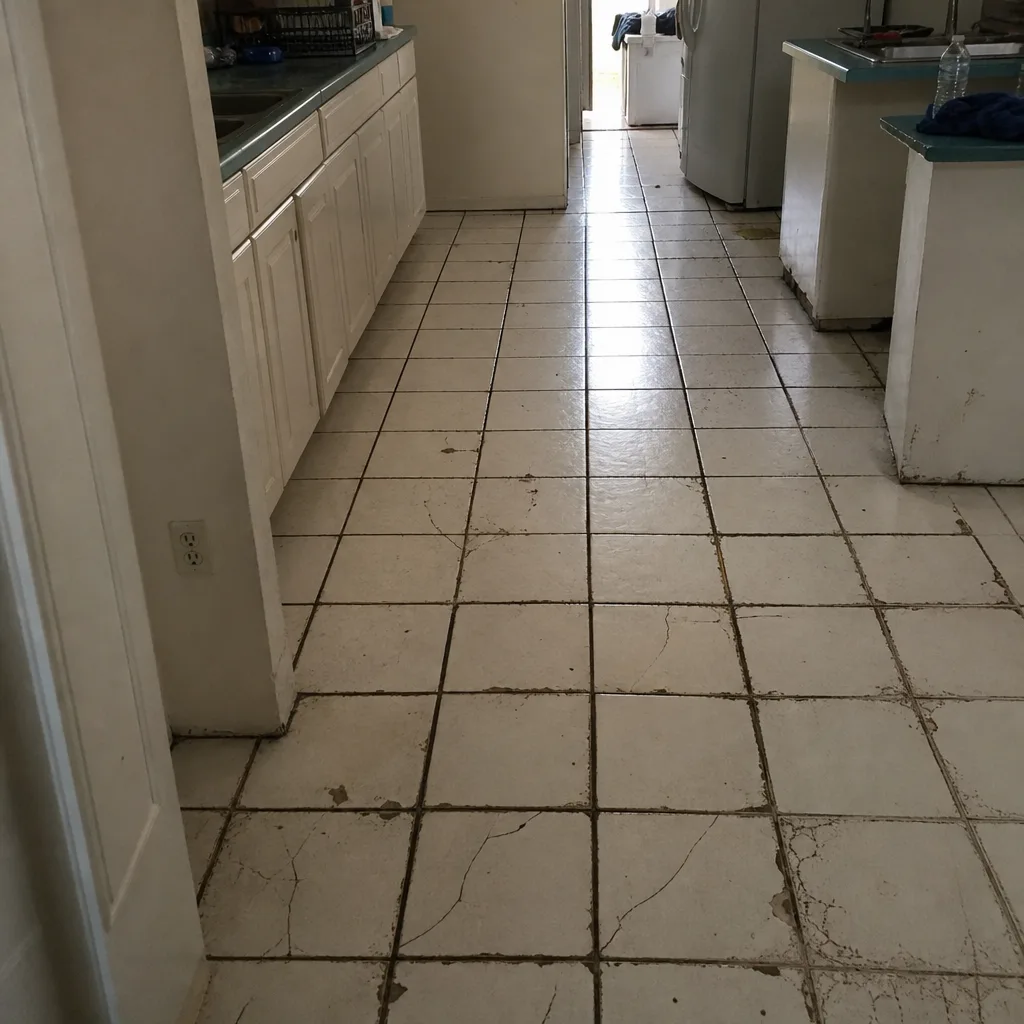 Before
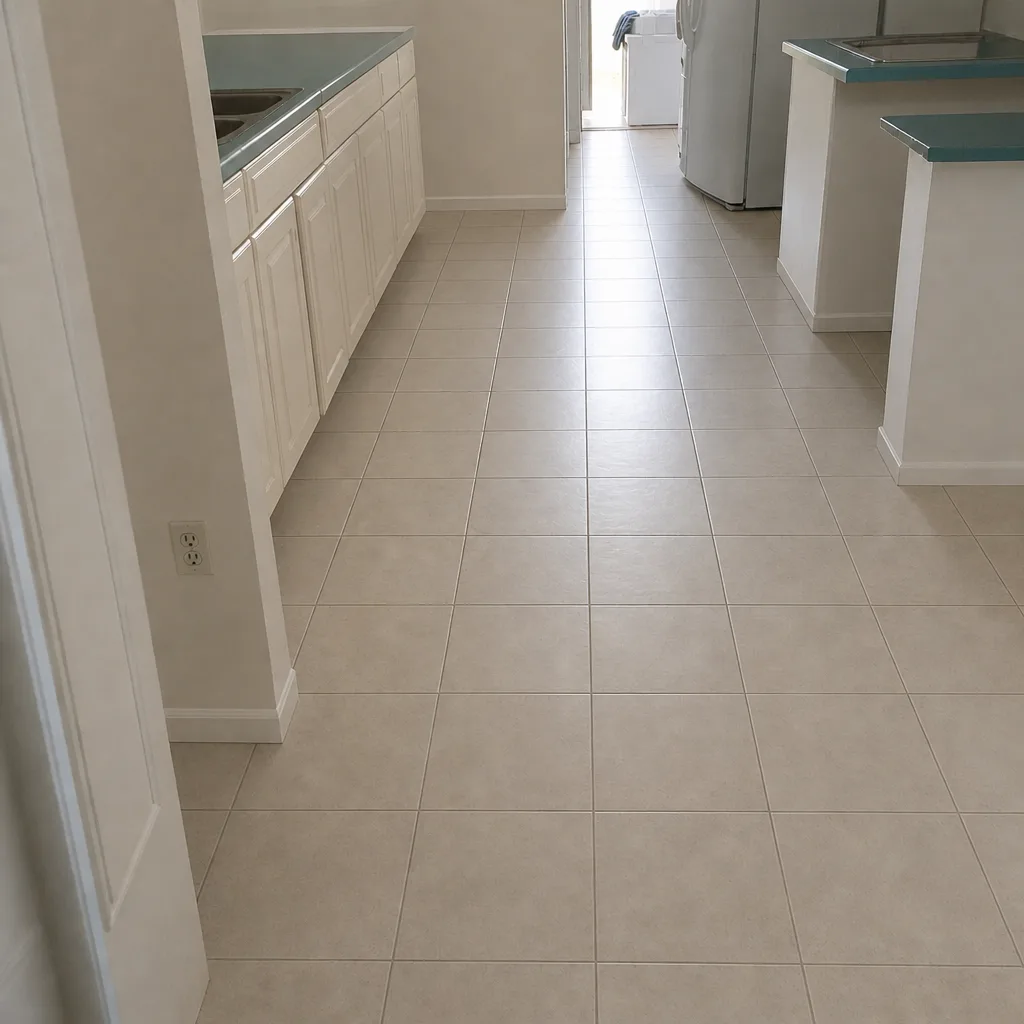 After
When to Call a Professional
Some flooring projects are within reach of a careful homeowner: a small carpet patch, a simple plank replacement. But when the project involves a subfloor assessment, full-room installation, tile layout with expansion joints, hardwood refinishing, or any situation where the warranty will matter, it’s time for a professional. The same goes for troubleshooting: a hollow tile, a seam that’s opening, a plank that’s lifting after install. Someone with experience needs to diagnose the problem and figure out whether the fix is a simple repair or a full replacement.
Floors Las Vegas offers free estimates in Las Vegas – call (844) 761-9353. Our technicians have up to 11 years of experience and we install and refinish flooring from nine nationally recognized brands, including Shaw, Mohawk, Daltile, and Karndean. We answer 24/7. Fast dispatch from 7am to 7pm, Sunday through Friday.
Frequently Asked Questions
Ask how the subfloor is assessed and what triggers a change order, in writing. This single question reveals whether you’re dealing with a technician who understands what’s actually under your floor or a salesperson who wants to close the deal and figure out problems later. Get the answer in the contract.
Yes, the C-20 classification covers flooring and floor covering work in Nevada. Ask for the contractor’s license number and confirm it’s active and properly classified through the Nevada State Contractors Board before signing. Call (844) 761-9353 for a free estimate and we’ll walk you through our credentials.
At minimum, a subfloor assessment should include checking for level, moisture (on slabs), and structural soundness. Ask whether slab moisture testing is included, how much leveling is covered, and what specific threshold triggers a change order. A quote without a written threshold is a quote with an open-ended price.
There are typically two warranties: manufacturer product warranty and installation labor warranty. Each covers different failures and each has its own exclusions. Read both before signing, ask which one covers your specific concern, and get the callback process in writing. Our team handles post-install issues through a documented process – call (844) 761-9353 to learn more.
Yes, and we recommend it. When you order carpet, order extra to store; dye lots vary and future matching will be difficult without it. For tile and other hard surface, an extra box of the same production run is the difference between a simple repair and a full-room replacement later.
Our flooring estimates are free. We schedule a measure and assessment, then provide a written quote. There’s no cost to get the quote and no obligation to move forward. Call (844) 761-9353 to schedule. We answer 24/7. Fast dispatch from 7am to 7pm, Sunday through Friday.
The Bottom Line
The questions that protect you on a flooring project aren’t the ones most homeowners ask. Price and timeline are easy to quote and easy to change. Licensing, subfloor scope, warranty layering, material provenance, and post-installation accountability are the questions that actually determine whether you get a floor that performs for years or a headache that outlasts the warranty. Ask them before you sign. Get the answers in writing. Compare contractors on the quality of those answers as much as on price. When you’re ready to talk specifics about a carpet, tile, or hardwood refinishing project in Las Vegas, our team is here to answer every question on this list.
Call (844) 761-9353 to schedule your free estimate. We answer 24/7. Fast dispatch from 7am to 7pm, Sunday through Friday.
Written by the team at Floors Las Vegas.