
Last updated November 17, 2026
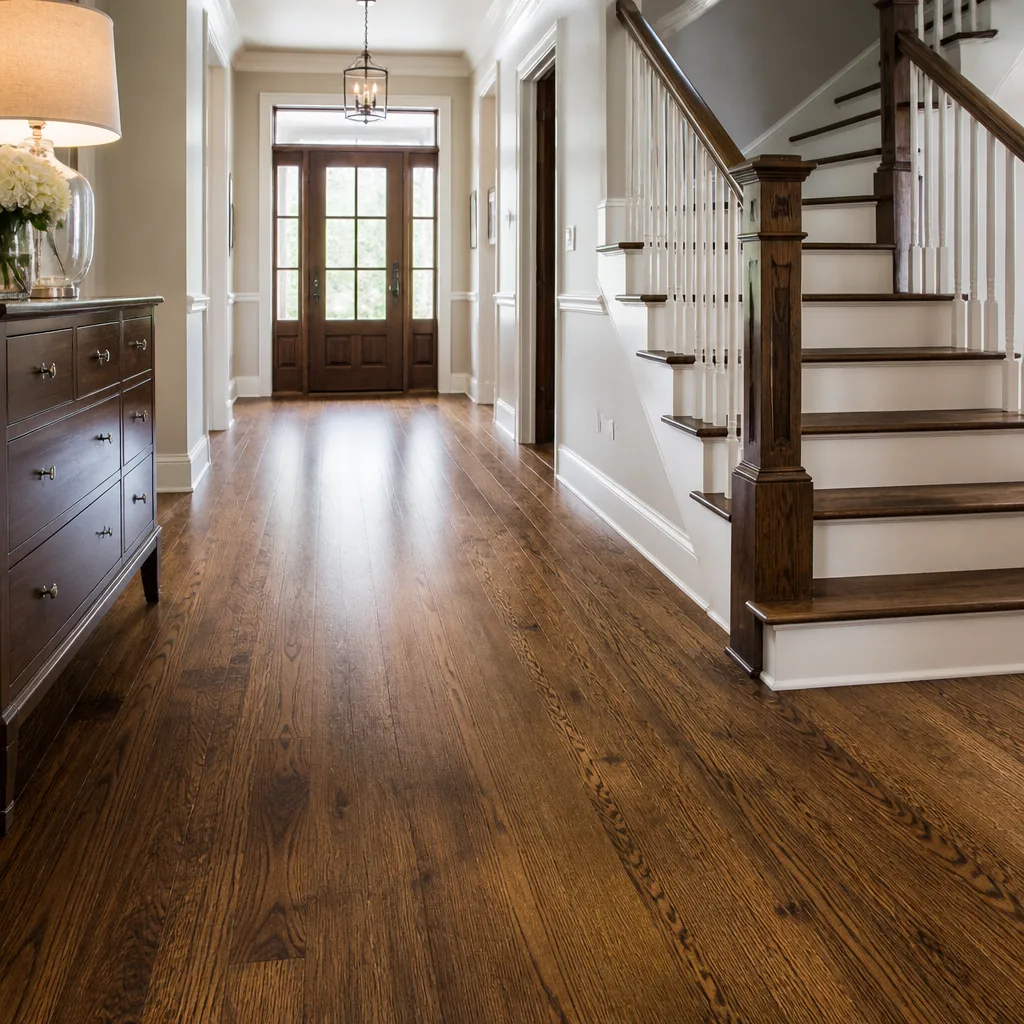 Hardwood
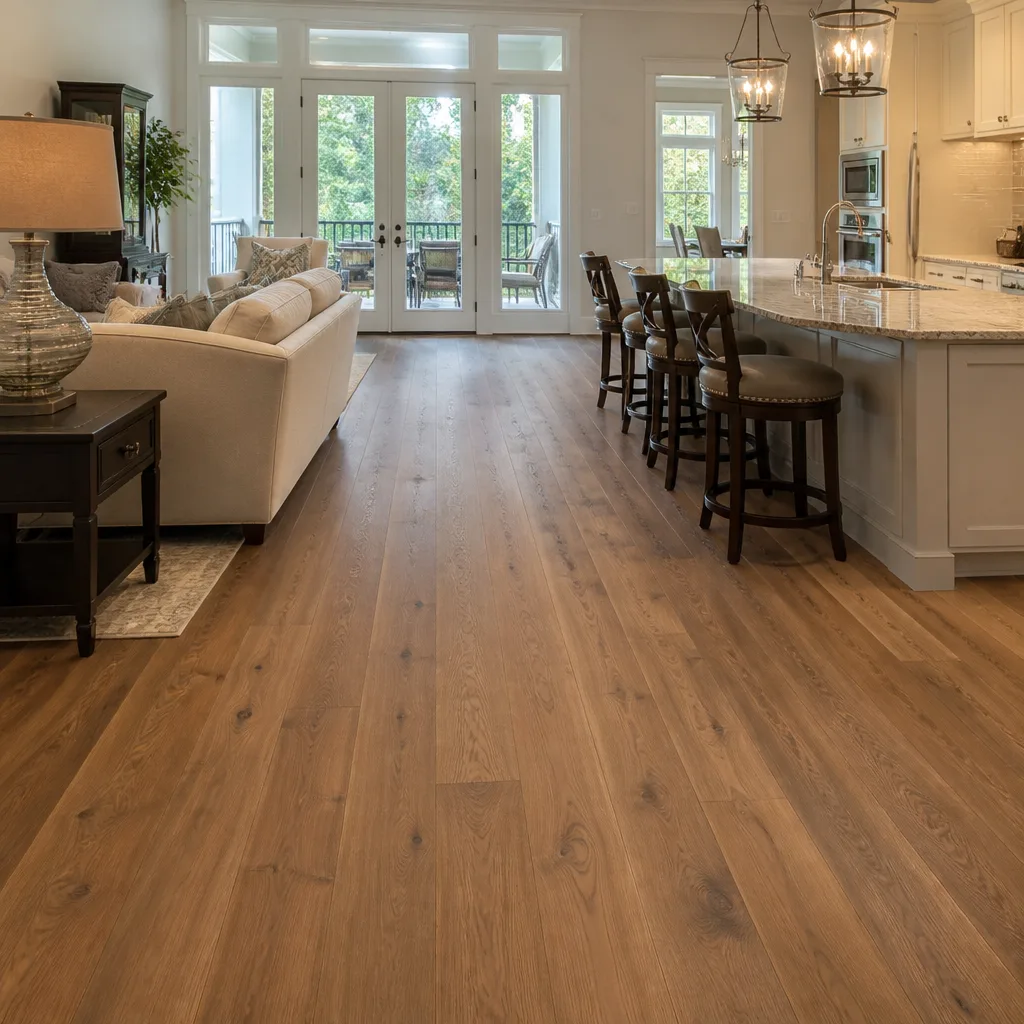 Engineered hardwood
 Luxury vinyl plank
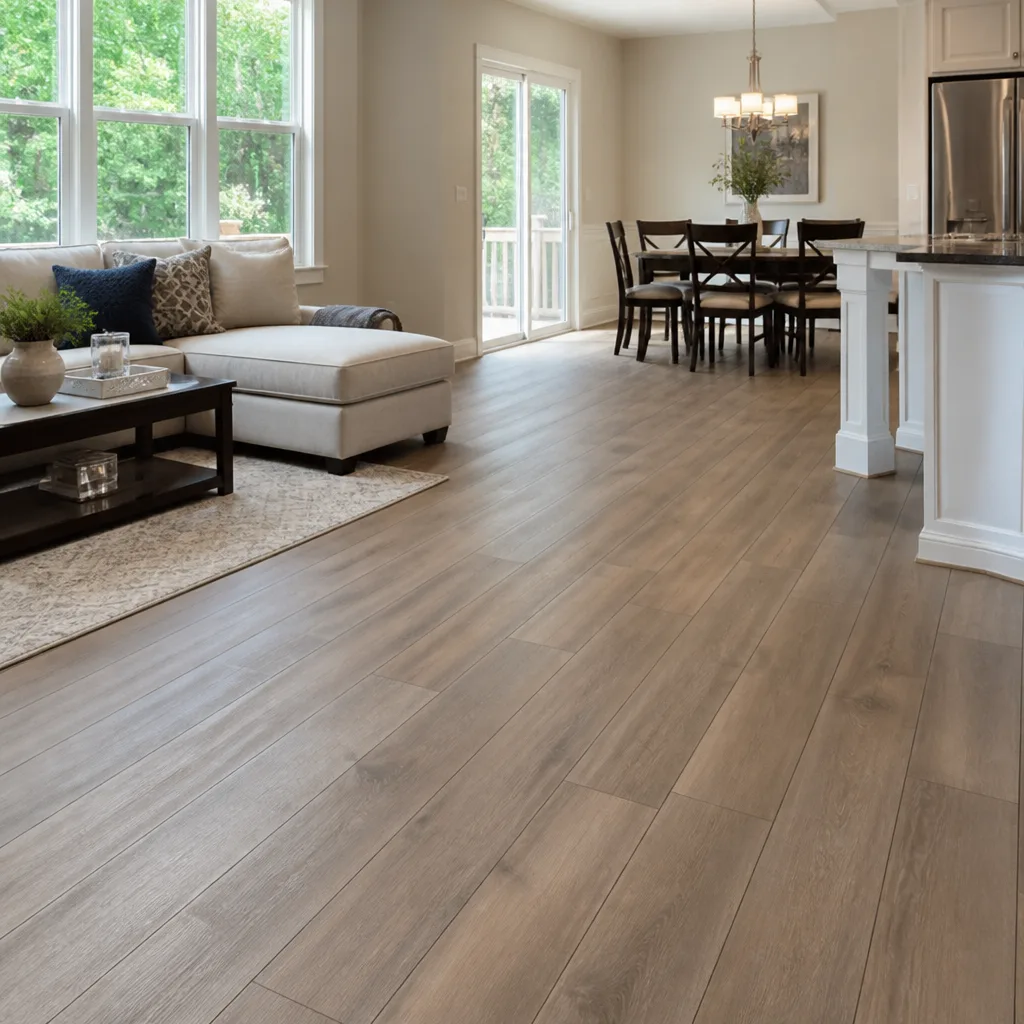 Laminate
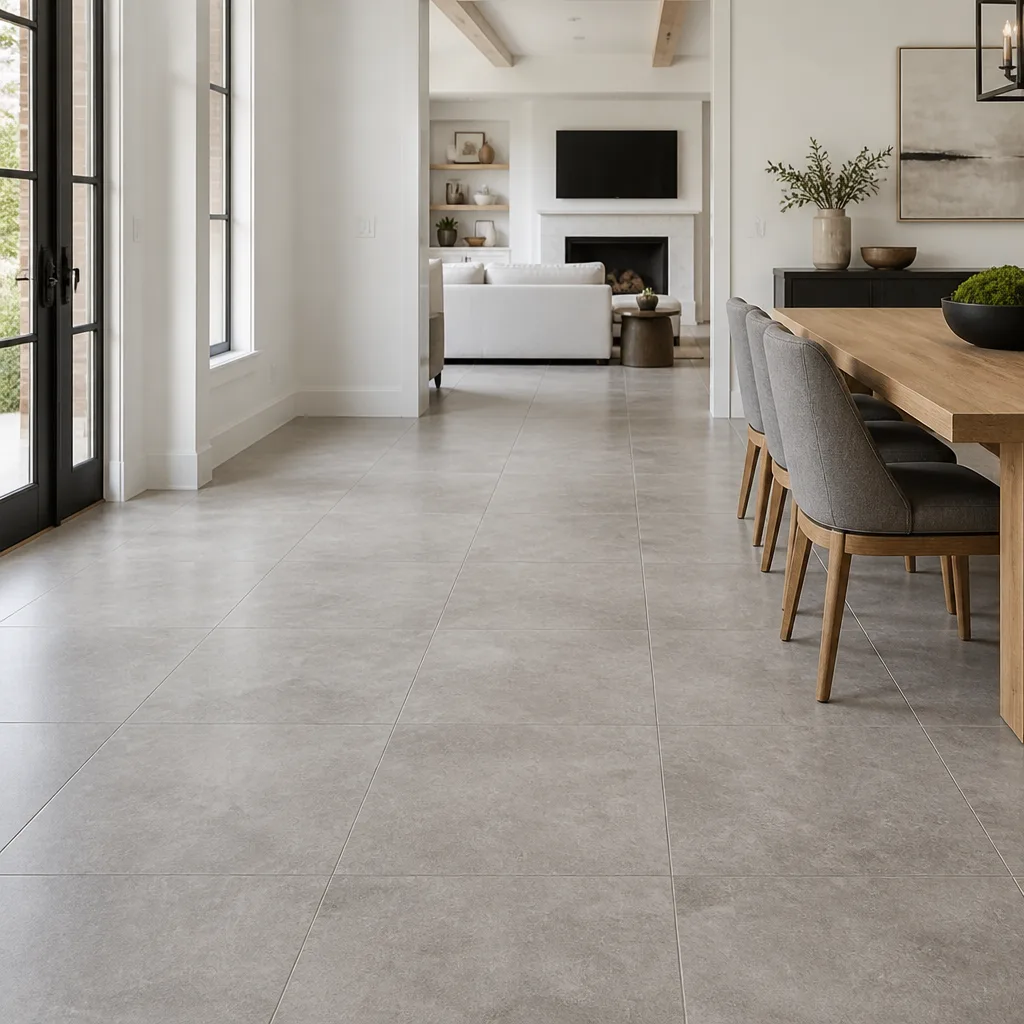 Porcelain tile
 Carpet
 Shaw
 Mohawk
 COREtec
 Pergo
Free in-home measure and written estimate: Shaw, Mohawk, COREtec and Pergo lines compared on your own rooms, with carpet, tile, vinyl plank, laminate and hardwood laid out side by side
Get your free estimateWhat Happens at a Free In-Home Flooring Estimate in Las Vegas
The measurement is the least valuable part of an in-home flooring estimate. Most homeowners expect a tape measure and a number. They get far more from a good visit, or far less from a bad one. What actually decides your project budget is what happens when the estimator crouches down and checks your slab for high spots, moisture, and old adhesive. That check tells you whether the floor you picked will sit flat and stay put, or whether the prep work pushes the job past your plan. In a Las Vegas home, where slab-on-grade construction is the norm, this matters more than almost anywhere. This guide walks you through a real estimate visit step by step, what a qualified estimator should inspect, the questions that separate a technician from a salesperson, and how to show up prepared.
Quick Answer
A free in-home flooring estimate in Las Vegas is a roughly one-hour visit where an estimator measures the space, inspects the slab and existing floor for flatness, moisture, and adhesive residue, checks transitions and light, then writes a line-item price for materials and installation. You leave with a document you can compare against other bids, not a ballpark number. The measurement itself takes minutes; the inspection and the conversation about how you use the room are what set the final price.
Styles & brands we work with
- Hardwood
- Engineered hardwood
- Luxury vinyl plank
- Laminate
- Porcelain tile
- Carpet
- Shaw
- Mohawk
- COREtec
- Pergo
Table of Contents
- Why a Free Estimate Is Not a Sales Call
- What a Qualified Estimator Physically Inspects
- Questions That Reveal Technical Depth
- How Brand Access Changes the Recommendation
- What to Have Ready Before the Estimator Arrives
- Written Line-Item Estimate vs. a Ballpark Number
- How Las Vegas Conditions Shape the Visit
- What Happens After the Estimate
Why a Free Estimate Is Not a Sales Call
A free estimate is a diagnostic visit, and you should treat it that way. If someone arrives with a sample book and a calculator and spends fifteen minutes walking your room, they have not done the work that protects your budget. A flooring installation lives or dies on what is under the surface, and only a physical visit can reveal that. In our experience, the difference between a smooth install and a problem job is almost always visible before anyone lifts a tool.
Here is the distinction that matters. A sales visit is designed to close a decision on the spot. A technical visit is designed to produce a document that reflects what your home actually needs. The best estimators do both at once, but the document comes first. If the price you receive has no line for floor prep, leveling, or removal of the old floor, ask why. It may be genuinely unnecessary, or it may be missing entirely.
At Floors Las Vegas, the estimate is free and the visit is built around inspection. We install and service the floor you choose across carpet, tile, and hardwood refinishing, and the recommendations follow what the room tells us. A home near the older stretches of downtown Las Vegas with a worn concrete slab needs a different conversation than a newer build in the southwest valley with a flat, freshly poured base. Both deserve a real inspection, not a quick glance.
What good looks like in the first ten minutes:
- The estimator asks how you use the room before quoting anything.
- They look at the baseboards, door clearances, and transitions.
- They pull out a straightedge or level and check the slab, not just measure.
- They ask about moisture, past leaks, and any adhesive left from an old floor.
- They explain what they are checking as they go.
If the visit lacks these steps, you are getting a quote, not an estimate. The distinction sounds small. It is the difference between a price that holds and one that grows once the crew arrives.
What a Qualified Estimator Physically Inspects
A proper in-home estimate goes through a defined checklist of physical conditions. Each item can change what the floor costs, and each one is easy to skip if the estimator is in a hurry. Here is what a qualified estimator should personally check during the visit.
- Slab flatness. Most Las Vegas homes are slab-on-grade, and slabs are rarely perfectly flat. High spots and dips make some floors rock, and transitions get uneven. The estimator checks with a straightedge across the room.
- Moisture. Concrete wicks moisture from below, and moisture is the enemy of many hard-surface floors and of carpet backing. The estimator checks this at the estimate, not after the flooring is delivered.
- Existing floor condition. Old tile may need removal. Old adhesive may need grinding. A failing subfloor or a soft spot gets found now, not mid-install.
- Transition points. Doorways, hallways, and where one flooring meets another are the spots most likely to look wrong. The estimator measures clearance and notes each transition.
- Square footage by room. Measured properly, with overage built into the quote, not guessed from a listing.
- Lighting and layout. Natural light changes how a floor reads. Direction of the planks or tile is a design decision made at the visit.
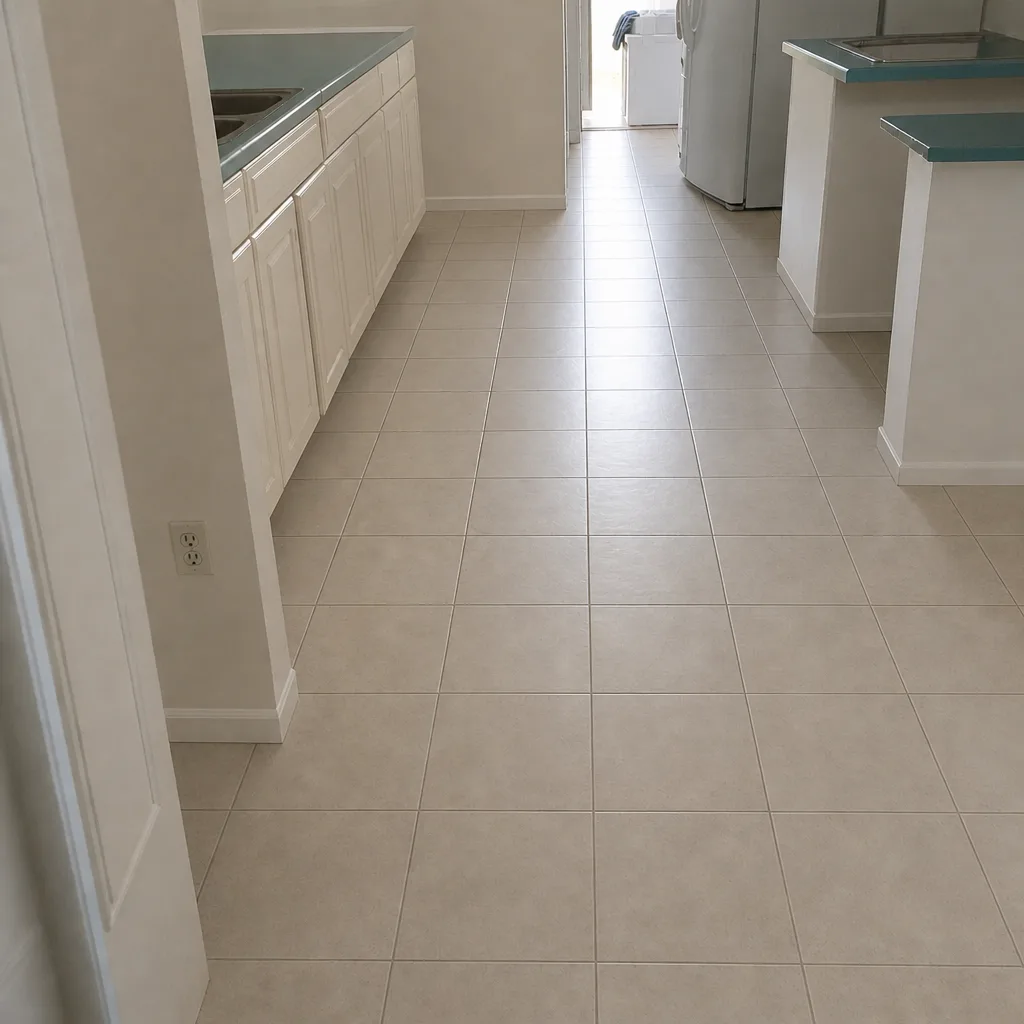
The flatness check matters most. A slab that reads fine to the eye can carry a dip that shows up when you place a level on it. A flooring specialist checks; a salesperson estimates from memory. In a city where so much housing sits on concrete, that single check often determines whether your floor needs prep work.
Questions That Reveal Technical Depth
You learn a lot about a flooring company by the questions you ask and how they answer. The strongest estimators welcome a technical conversation because it is how they earn trust. Ask these during the visit, and listen for a specific, unhesitating answer rather than a smooth sales line.
Ask how they will handle the slab. A knowledgeable estimator will talk about checking flatness and moisture, and about what prep the floor will need. A sales visit will pivot back to product choice.
Ask what happens if the floor needs prep. The answer should be that prep is priced in the estimate, not discovered later. A real line item is a real commitment.
Ask who does the install. Ask whether the same people who measured are the ones you can call if something is wrong.
Ask about the transition details. How plank meets tile, how carpet meets hardwood, how the floor handles a doorway. If the answer is vague, that is your answer.
At Floors Las Vegas, our technicians have up to 11 years of experience, and the estimate is the point where that experience gets applied to your specific rooms. We would rather answer a technical question at the estimate than explain a surprise after the floor is down.
Signs of real depth versus a sales script:
- They talk about the slab and moisture before talking about color.
- They mention prep or removal as a possible line item, unprompted.
- They can explain why one floor suits a busy kitchen and another does not.
- They write things down as they go.
- They give you a document, not a number said out loud.
How Brand Access Changes the Recommendation
The size of a company’s product access quietly shapes the advice you get. A shop with one or two brands will steer your project toward what is on hand, sometimes without meaning to. A shop with a broad catalog can fit the floor to your room and your budget instead of fitting your room to the inventory. That is a selection advantage you can feel during the estimate.
We supply and install floors from nine flooring brands, spanning carpet, hard surface, and refinishing. That range means the conversation stays about how you live, not about what happens to be in stock. The estimator can show you options across categories in a single visit, so you are not driving from one dealer to another comparing samples in different lighting.
Some of that access matters in ways homeowners do not expect. Karndean and Mannington are design-forward lines that broaden the resilient and premium options beyond the commodity tier, so a busy household gets more to choose from than a single entry-level sheet. Daltile gives tile customers a direct line to a manufacturer with established residential quality benchmarks. When the estimator can pull a genuinely appropriate option from across the range, the recommendation is about the room, not the warehouse.
That breadth also protects you at the prep stage. If the inspection turns up a condition that favors one floor category over another, a broad catalog lets the recommendation shift without starting over. Narrow inventory makes every project look like the same project. Broad access lets a Las Vegas home get the floor it actually needs.
What to Have Ready Before the Estimator Arrives
A prepared homeowner gets a more accurate estimate and a faster visit. You do not need to do the estimator’s job, but a little groundwork sharpens the recommendation and the price. Here is what to have ready.
- A rough sketch with dimensions. If you have square footage, wonderful. If not, a quick sketch with room measurements gives the estimator a starting map.
- Photos of problem areas. Cracks, soft spots, a lifting tile, adhesive residue. Photos help the estimator plan prep before arriving.
- A clear brief on how the space is used. A kitchen with dogs and kids is not a formal dining room. Tell them what happens in the room and who walks on it.
- The rest of the timeline. If other work like painting or moving is happening, say so. Sequencing affects the install date.
- Your budget range, honestly. It helps the estimator steer toward floors that fit before you fall for one that does not.
- Parking and access notes. Where the crew can pull in and how flooring will enter the home.
Keep the visit focused on the spaces you are flooring now, and mention any plans for later rooms. A whole-home picture helps the estimator align the flooring across rooms so transitions match. It also means fewer surprises when the second phase begins. If outdoor dust or heat is a factor, mention how doors and windows will be handled during install.
Written Line-Item Estimate vs. a Ballpark Number
Only a written, line-item estimate is a real project commitment. A ballpark number is a conversation. They are not the same thing, and confusing them costs homeowners money and time. Here is how to tell the difference at a glance.
What a written line-item estimate includes:
- Materials by product and area, with overage shown.
- Installation labor, priced by area or job.
- Floor prep, removal, and disposal as separate lines where needed.
- Transition materials and trim.
- Any refinishing line, if hardwood is involved.
- A clear scope so you know what is and is not covered.
What a ballpark number looks like: a single figure, often said out loud, sometimes scribbled. It may not separate material from labor, prep from install, or floor from trim. When the two are separated, you can compare bids fairly and see where the real differences are. When they are blended, you are comparing guesses.
This is also where refinishing enters the conversation. Hardwood refinishing is a dedicated service, not an afterthought, and it turns on the condition of the wood, checked at the estimate. A floor that can be refinished is often the smarter move than a full replacement, and that decision belongs on the written estimate where you can weigh it against the alternative. Refinished, not replaced, is a real option when the wood supports it. We handle Las Vegas hardwood projects with this in front of us from the first visit.
When you get to the install itself, the line-item estimate is the map. The written estimate sets the final price. Call (844) 761-9353 to schedule your free estimate, and bring your questions.
How Las Vegas Conditions Shape the Visit
Las Vegas homes present conditions that a flooring estimator should know on sight. The desert climate and slab-on-grade construction combine to make certain checks routine, not optional. An estimator who knows this city will ask about them without being prompted.
Concrete slabs in the valley wick moisture from below, and that behaves differently depending on the lot and the season. A floor that resists water at the surface still has to deal with moisture from underneath, so the estimator checks rather than assumes. Existing tile and old adhesive are common in older neighborhoods, and both add prep to a job. The estimator inspects the transitions where plank meets tile, because that is where unevenness shows and where the room’s whole look can be undone by a sloppy seam.
Light is another local factor. Bright, high-desert daylight changes how a floor reads, and a floor that looks great in dim showroom light can shift in a sunlit room. Direction of planks and tile matters here, and the estimator should talk it through while standing in the actual space. That single conversation is something no showroom can give you.
Transitions, light, and slab conditions all come together in one visit. It is why Floors Las Vegas treats the estimate as the heart of the process, not a formality, and why a Las Vegas home gets a recommendation built on what the room actually shows.
What Happens After the Estimate
The visit ends with a document and a decision. What you do with both determines whether your project runs on schedule. Here is the sequence to expect after the estimator leaves.
- Review the written estimate line by line. Check that prep, removal, and transitions are all accounted for.
- Compare bids on the same scope. Make sure other quotes cover the same work before comparing price.
- Choose your floor with the estimate in hand. Use the estimator’s recommendation as a starting point, not a ceiling.
- Schedule the install. The install date is set after the estimate, with the written price in place.
- Prep the space. Clear the room and handle access so the crew can begin on the agreed day.
If the written estimate raises a question, call and ask. A good estimator would rather clarify the number before the install than after. And if the inspection turned up a condition that changes the recommendation, that conversation happens now, with time to plan, not on the install day.
Homeowners often ask about carpet installation and tile flooring installation in the same breath, and the estimate is where the two get compared against the room and the budget. The written estimate is how you keep the comparison honest.
Common Mistakes to Avoid
- Treating the estimate as a price-collection errand. If you collect numbers without asking what was inspected, you have quotes but no clarity. Ask what the estimator checked on the slab.
- Skipping the prep line. A quote with no prep, removal, or leveling line may be missing the work your Las Vegas slab needs. Ask directly whether prep is included.
- Falling for the ballpark. A number said out loud can change when reality shows up. Insist on a written, line-item estimate before comparing anything.
- Choosing the floor before the inspection. Deciding on a product before the estimator checks moisture and flatness can mean a floor that fights the room. Let the room inform the choice.
- Not saying how the space is used. A busy kitchen with pets and a formal dining room need different floors. Withholding how you live produces a floor that does not fit.
- Ignoring the transitions. Doorways and seams are where a floor looks finished or amateur. Confirm those are in the quote.
- Comparing blended bids. If one bid separates labor, material, and prep and another does not, compare on scope before comparing on total.
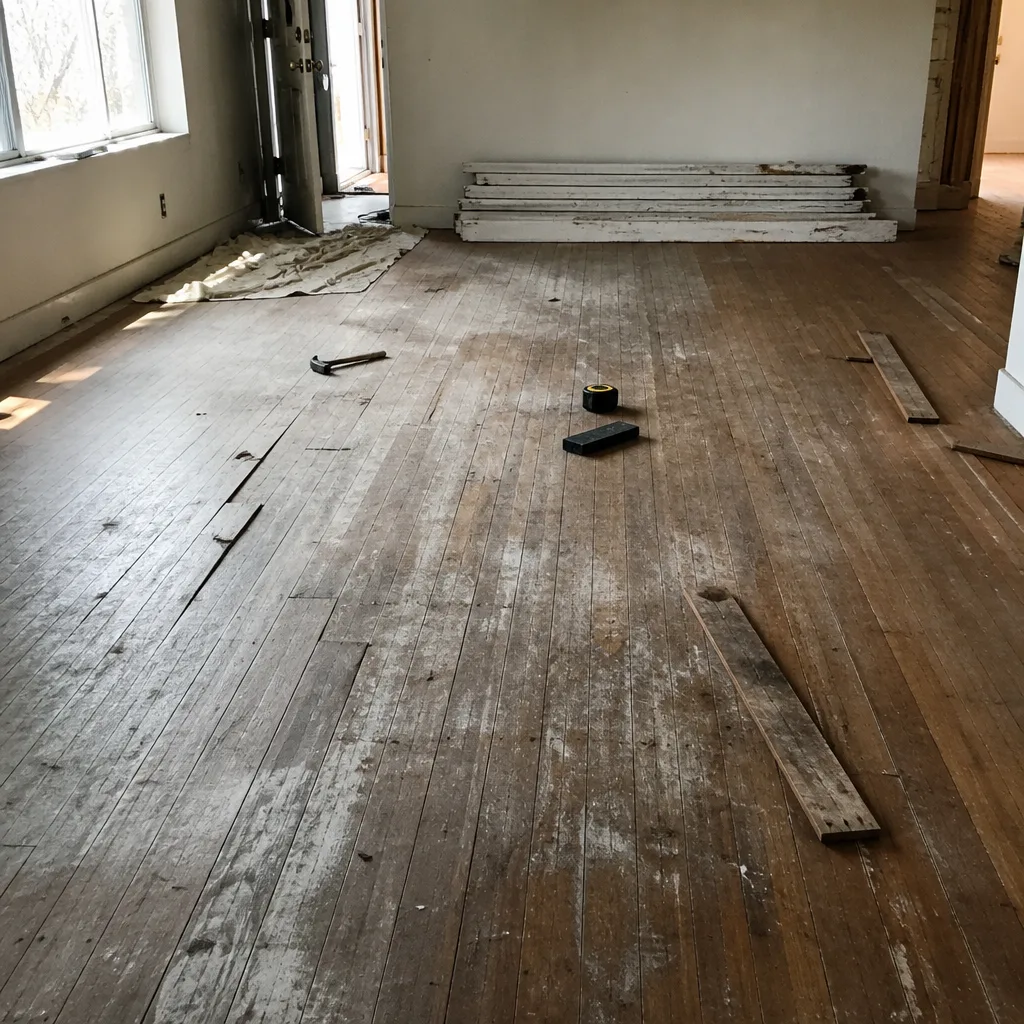
See the difference
 Before
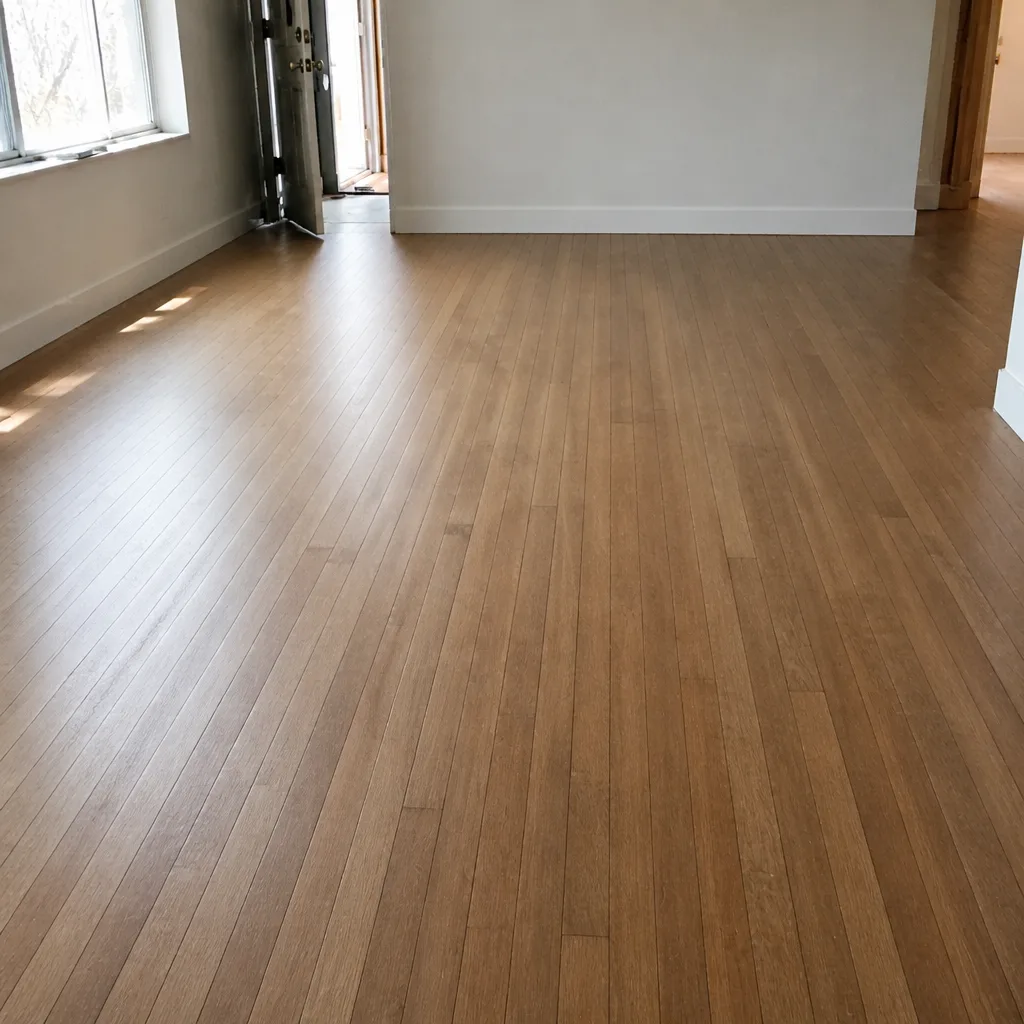 After
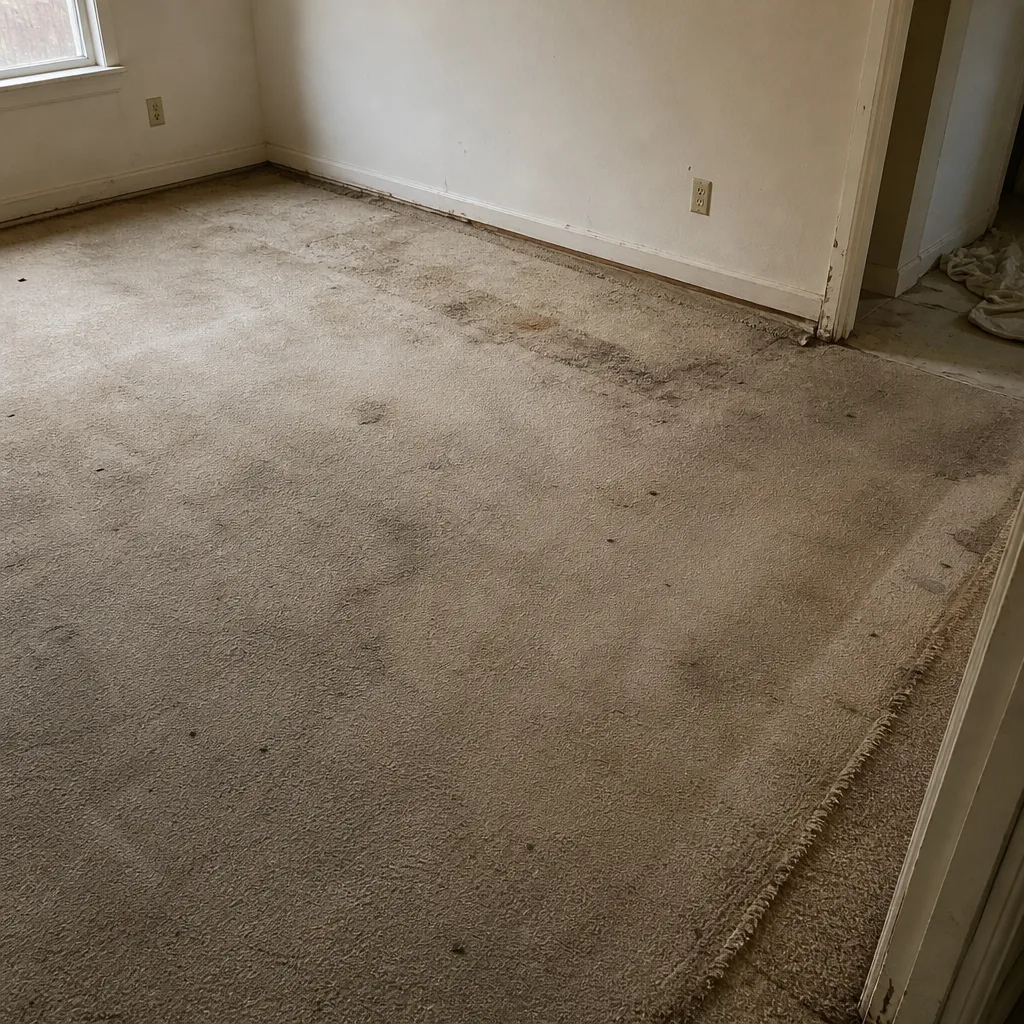 Before
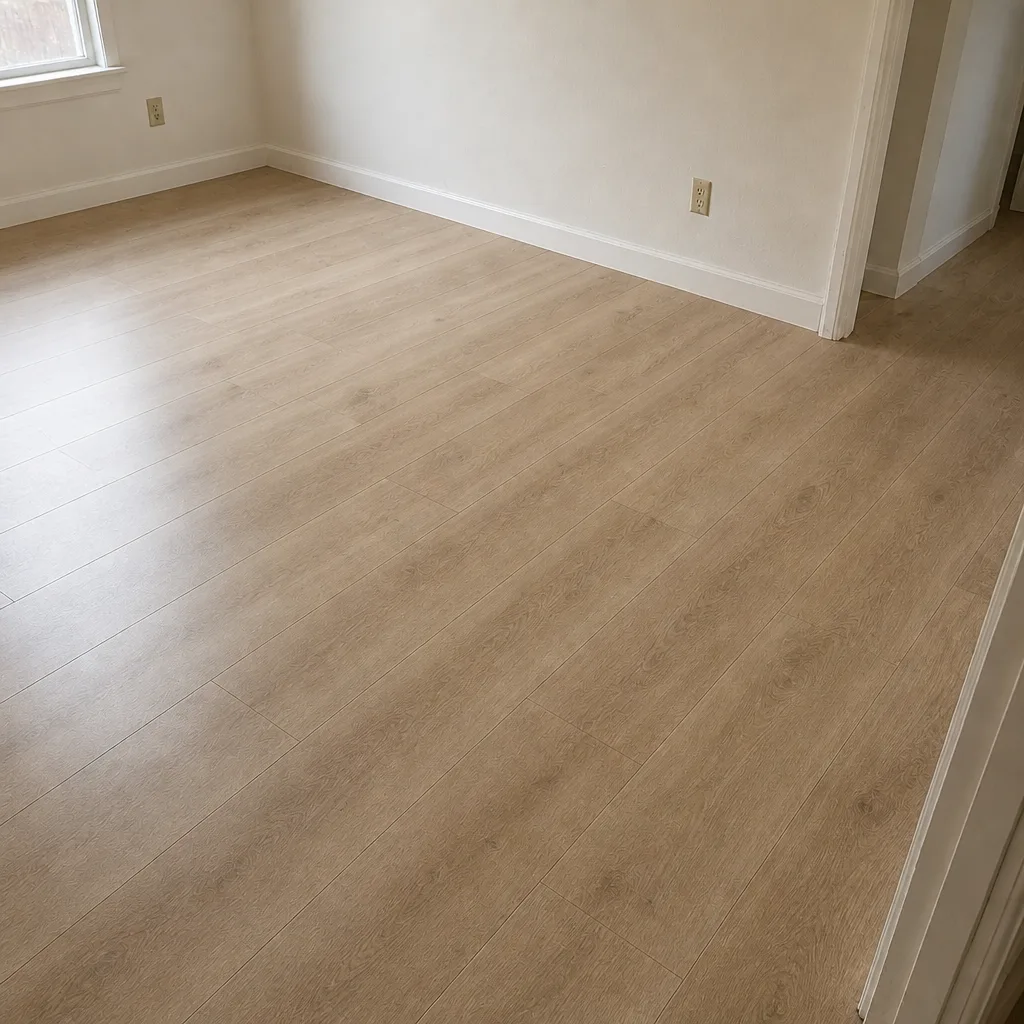 After
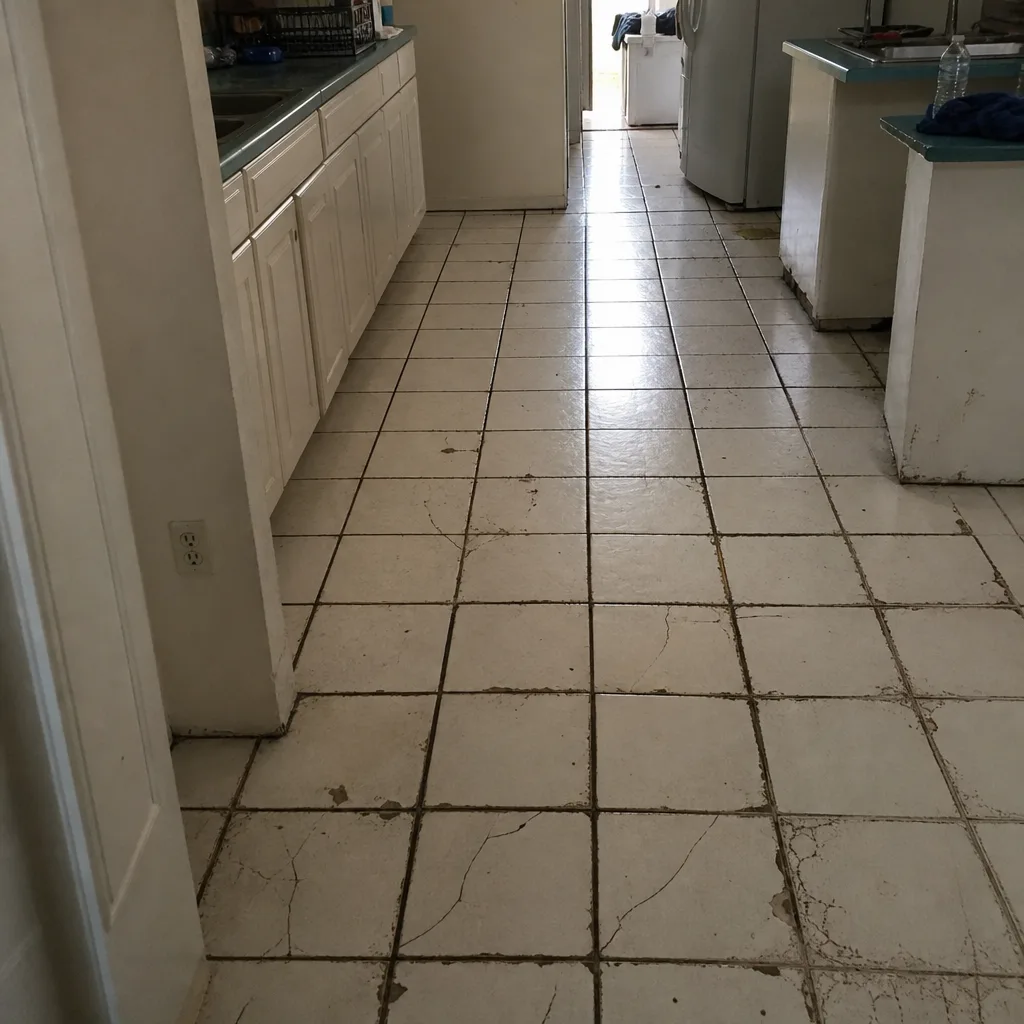 Before
 After
When to Call a Professional
Call a flooring professional when the room has visible cracks, a soft or bouncy area, lifting tile, or old adhesive you cannot identify. Call when the space has had water intrusion and you are not sure the slab is dry. Call when door clearances are tight and transitions look complicated, or when you are flooring multiple rooms across different surfaces and want the transitions to match. Call when the wood floor might be refinished but you are not sure the wood is thick enough to support it; that answer comes from the estimator at the estimate. Floors Las Vegas offers free estimates in Las Vegas, and we would rather answer a question now than after the floor is down. Call (844) 761-9353 to schedule yours.
Frequently Asked Questions
Most visits run about an hour, depending on how many rooms you are flooring and how much inspection the slab needs. The measurement takes minutes; the inspection and the conversation take longer. A larger project with multiple surfaces and hardwood refinishing can run a bit longer. Call (844) 761-9353 for an exact window.
Yes, the estimate is free, and the written price sets the final price. There is no charge for the visit or the estimate document. Call (844) 761-9353 to schedule yours.
They should, because both conditions affect what your floor costs and how it performs. A qualified estimator checks flatness with a straightedge and moisture at the estimate, not after delivery. If a visit skips those checks, ask why before you compare prices.
No. You do not need to empty the room for the estimate itself; the estimator needs to see the floor and the transitions. Clear the space before the install day, not before the visit. Have a rough sketch and photos of problem areas ready instead.
Sometimes, and the answer depends on the thickness of the wood and its condition, checked at the estimate. Refinishing is often the smarter option when the wood supports it, and the estimator will tell you honestly if it does not. Call (844) 761-9353 to find out for your floor.
You can see options across nine flooring brands, spanning carpet, hard surface, and refinishing. That range means the recommendation fits your room and budget rather than the inventory on hand. The estimator will walk you through the options that suit how you actually live.
The Bottom Line
A free in-home flooring estimate in Las Vegas is a diagnostic visit, not a price-collection errand. The measurement is the easy part. What determines your project is what the estimator finds on the slab, at the transitions, and in the light, and whether that inspection becomes a written line-item estimate or just a ballpark number. Come prepared with a sketch, photos, and a clear brief on how the space is used. Ask the questions that reveal technical depth. Expect the prep, removal, and transitions to be handled in writing. And use the estimate to fit the floor to your room, from a selection broad enough to make that possible. Call (844) 761-9353 for a free estimate. We answer 24/7. Fast dispatch from 7am to 7pm, Sunday through Friday.
Written by the team at Floors Las Vegas.