
Last updated November 17, 2026
 Hardwood
 Engineered hardwood
 Luxury vinyl plank
 Laminate
 Porcelain tile
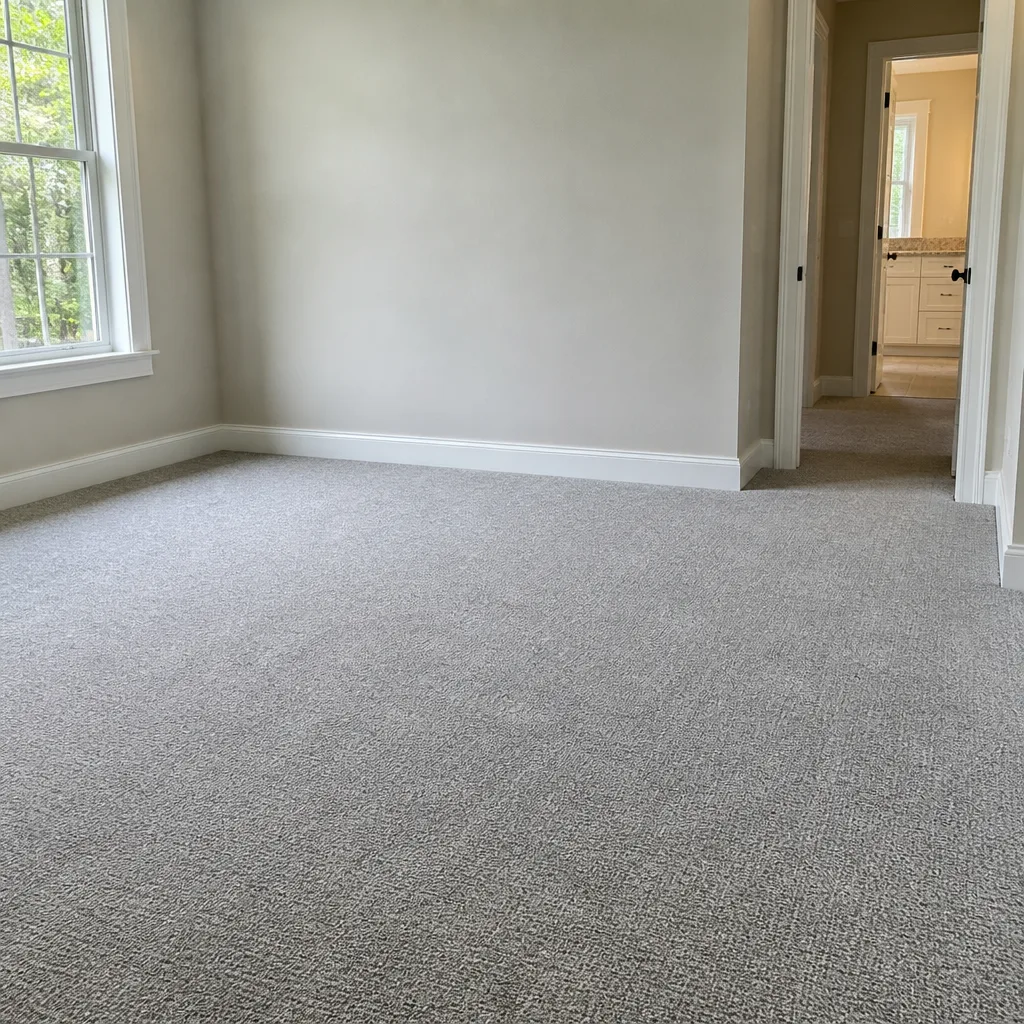 Carpet
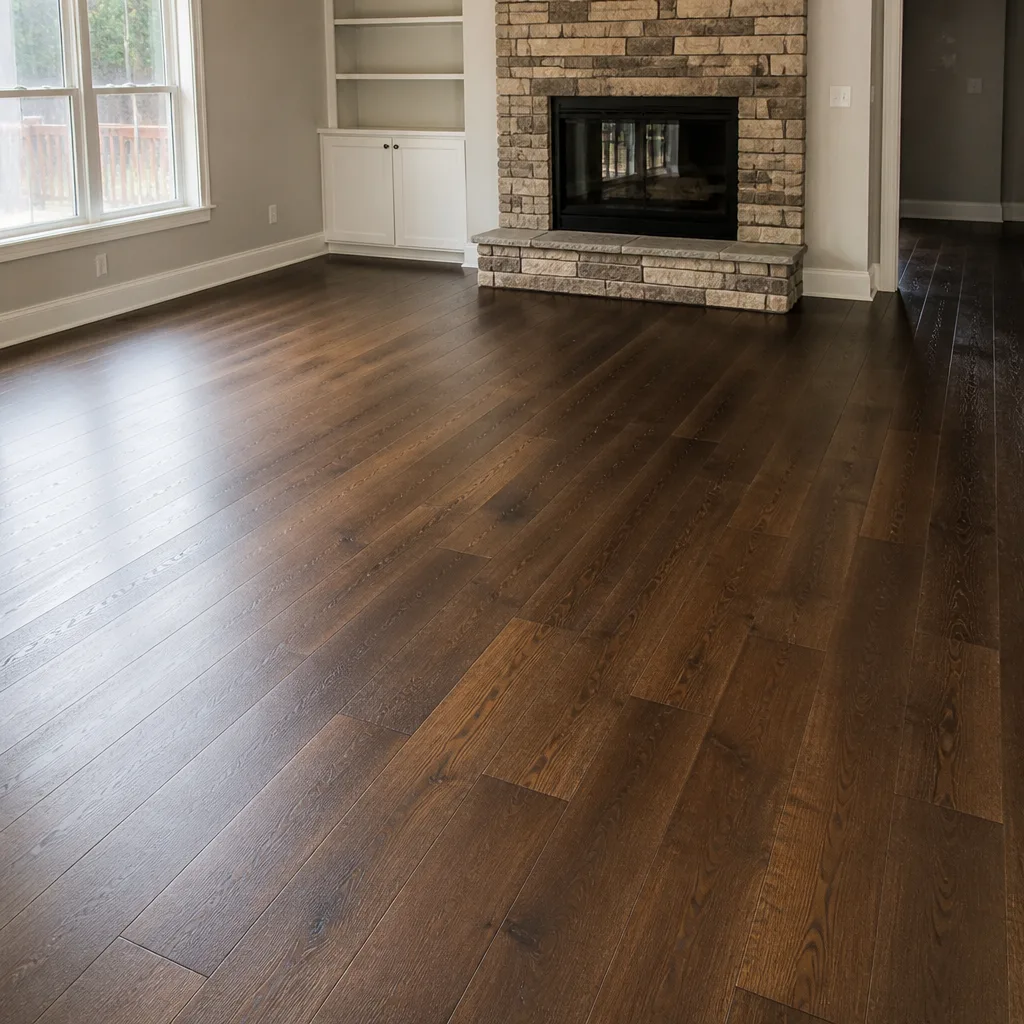 Shaw
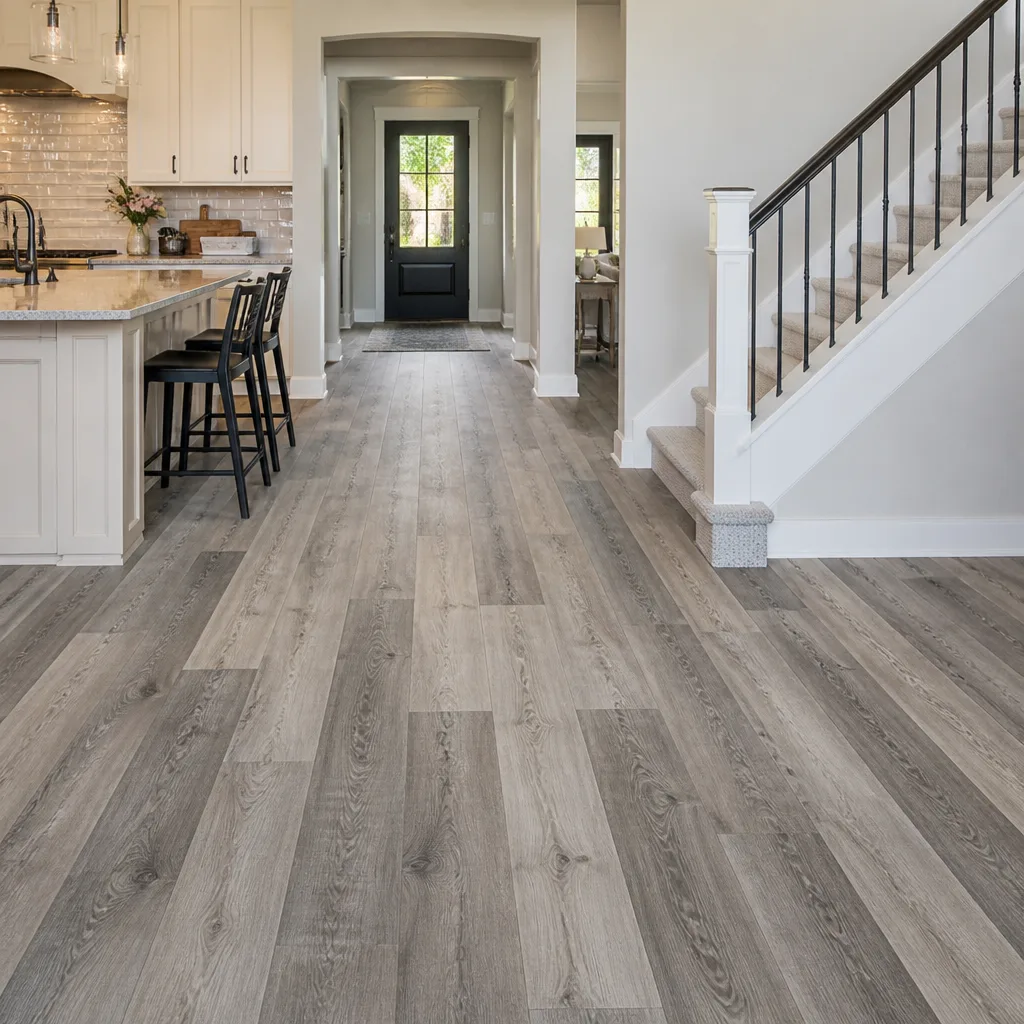 Mohawk
 COREtec
 Pergo
Free in-home measure and written estimate: Shaw, Mohawk, COREtec and Pergo lines compared on your own rooms, with carpet, tile, vinyl plank, laminate and hardwood laid out side by side
Get your free estimateHow to Hire a Flooring Contractor in Las Vegas: A Step-by-Step Guide
Most flooring advice tells you to get three quotes and pick the middle one. That advice quietly assumes all three contractors will actually send their own people to do the work. In Las Vegas, that assumption breaks down fast. Nevada requires flooring contractors to hold a C-20 license, yet a large share of residential flooring work here gets subcontracted to crews the quoting company never employs, never trains, and never checks. The person who walks your hallway with a laser measure is often not the person who lays your tile. This guide gives you a sequential vetting process: how to check a license, how to ask the subcontractor question, what a real contract says, and the red flags that show up again and again in this market.
Quick Answer
To hire a flooring contractor in Las Vegas, verify an active C-20 license through the Nevada State Contractors Board, confirm in writing whether installation crews are employees or subcontractors, and insist on a contract that names the subfloor prep, the exact brand and SKU of materials, the warranty terms, and a payment schedule tied to milestones. Get a free in-home measure and a written estimate before any deposit changes hands. A legitimate contractor will welcome every one of those checks.
Styles & brands we work with
- Hardwood
- Engineered hardwood
- Luxury vinyl plank
- Laminate
- Porcelain tile
- Carpet
- Shaw
- Mohawk
- COREtec
- Pergo
Table of Contents
- 1. Verify the C-20 License in Under Two Minutes
- 2. Ask the Subcontractor Question Directly
- 3. What a Legitimate Flooring Contract Must Include
- 4. Las Vegas Red Flags That Signal Trouble
- 5. Understand Subfloor Work Before You Sign
- 6. How Brand Breadth Changes the Conversation
- 7. Why the Desert Climate Belongs in the Conversation
- 8. Refinishing Versus Replacing Hardwood
1. Verify the C-20 License in Under Two Minutes
A flooring contractor working in Nevada needs a C-20 license issued by the Nevada State Contractors Board. That license is public record, and checking it takes less time than reading a single review. This is the first step, not a formality. Everything else in this guide rests on the contractor being licensed to do the work at all.
- Go to the Nevada State Contractors Board website and open the license search.
- Search by the company’s business name, not by a first name or a phone number.
- Confirm the license status reads active, and check the classification shows C-20 for flooring.
- Read the name on the license and make sure it matches the name on your quote and your contract.
- Check whether the listing shows any disciplinary action or complaint history.
- Ask the contractor for the license number before they arrive for the estimate, then confirm what they told you against the search result.
The mismatch that matters most is a quote from one entity and a license held by another. If the salesperson hands you a card for a company whose name doesn’t appear on the license record, slow down. Sometimes there’s a reasonable explanation, such as a parent company or a dba. Sometimes there isn’t one at all. Either way, you ask the question before signing anything.
One more layer: ask whether the license is held by the business entity or by an individual qualifier. A license tied to one person doesn’t automatically cover a different crew installing under a different name. This is precisely how unlicensed operators slip into Las Vegas renovation projects, and a two-minute search filters most of them out.
2. Ask the Subcontractor Question Directly
“Are your installers W-2 employees or independent subcontractors?” The answer tells you who is accountable when something goes wrong. Neither answer is automatically disqualifying. Plenty of reputable flooring companies use vetted subcontractors. What matters is whether the company can tell you clearly, in writing, who is coming to your house and who stands behind their work.
When crews are employees, the company controls training, scheduling, and quality standards directly. When crews are independent subs, the company is coordinating other businesses, which means the warranty you receive is only as solid as the company’s relationship with those subs. That can work well. It can also mean the company that quoted you is a scheduling layer with no ability to fix a bad installation.
Here’s how to press the question without turning the estimate into an interrogation:
- Ask who will physically install the floor and whether they’ve installed this specific product before.
- Ask which company employs the installers, and get that name written into the contract if it differs from the company you hired.
- Ask what happens if the installer’s work fails a walkthrough. Who removes and replaces it, and who pays for the material?
- Ask whether the same crew handles multiple surface types or whether carpet, tile, and hardwood get different crews. Different crews are normal; unclear answers are not.
In our experience, the contractors who answer this cleanly are the ones who’ve thought about accountability. The ones who get defensive, or who say “we’ve never had a problem” without naming anyone, usually haven’t. This matters more in a market where renovation booms pull in crews from out of state for a season and then they’re gone. A Floors Las Vegas estimate is built around a specific conversation about who does the work, because the question is fair and the answer should be easy.
3. What a Legitimate Flooring Contract Must Include
A flooring contract in Las Vegas should not be a one-page invoice with a total at the bottom. It should be specific enough that two different people reading it would expect the same floor at the end. Anything missing from the contract is a gap you’ll be negotiating after the install, when your leverage is gone.
Check for these elements before you sign:
- Scope of subfloor work. Is prep included, or is it billed separately if the subfloor turns out to be uneven? Most Las Vegas homes have some variance under the existing floor, and the contract should say how it’s handled and at what cost.
- Brand and SKU of materials. “Premium carpet” is not a specification. Shaw and Mohawk both make entry-level and high-end products under different names. The contract should name the exact product and, ideally, the SKU or dye lot.
- Square footage, measured and stated. Vague square footage is the most common source of surprise charges. The measurement should be on the estimate, room by room.
- Warranty terms. Ask for the manufacturer’s warranty documents and the installer’s own workmanship warranty in writing, and read what voids each one.
- Payment schedule tied to milestones. A deposit at signing is normal. Full payment before the floor is finished is not.
- Start and completion expectations. The schedule is set at the estimate, after the measure. The contract should reflect what was agreed.
- Change order process. If you add a room or upgrade the product mid-job, how is that priced and approved?
If a contractor won’t put any of this in writing, that’s your answer. The written estimate sets the final price, and a company confident in its own pricing has no reason to resist itemizing it.
4. Las Vegas Red Flags That Signal Trouble
The specific warning signs in this market differ from those in older, slower-moving cities. Las Vegas has a large renter population, a steady flow of new construction, and a renovation market that rewards anyone who can knock on a door with a business card. Some of the operators who respond to that demand shouldn’t be installing floors.
Watch for these:
- Vague square footage. If the quote gives a total price without stating how many square feet it covers, you can’t compare it to anything. Press for the measurement.
- Cash-only deposits. A licensed contractor takes a check or a card and gives you a receipt tied to a written contract. Cash requests are a way to stay off the record.
- No physical address you can visit. You don’t need a showroom to hire a flooring contractor, but the address on the contract should be a real business location, not a P.O. box.
- A quote that won’t name the product. “We’ll install a nice luxury vinyl” usually means whatever is cheapest that week. Ask for the brand and the SKU.
- Pressure to sign the same day. Real flooring work doesn’t require same-day commitment. Pricing that expires in a few hours is a sales tactic.
- No written subfloor plan. Floors in Las Vegas sit over slab in most homes, and slab issues are common. A contractor who hasn’t thought about prep hasn’t thought about your floor.
- Warranty promises that aren’t in writing. A verbal “we’ll take care of you” is worth what it costs.
None of these flags is conclusive on its own. Two or three together is a pattern. When that happens, move on: there are enough legitimate flooring contractors in Las Vegas that you don’t need to talk yourself into one.
5. Understand Subfloor Work Before You Sign
Subfloor condition is the single biggest driver of cost variance in a flooring estimate, and it’s the part most homeowners skip when comparing quotes. In Las Vegas, most homes sit on a concrete slab rather than a wood subfloor. Slab moisture, minor cracks, old adhesive residue from previous flooring, and unevenness from settling all affect how the new floor performs. A quote built on an assumption that none of these exist is a quote built on hope.
What a thorough estimate visit looks like:
- The estimator measures every room and states the square footage on the quote.
- They check the slab for moisture and note any signs of past water intrusion.
- They look at the condition of the existing floor and how it will be removed.
- They identify any transitions, thresholds, or stair work that affects the installation.
- They explain what prep is included and what would be billed separately, with a range for the separate work.
- They tell you what the product manufacturer requires for installation, and how the home will be set up for it.
If the estimator skips the slab check, they’re guessing. Hard surface installations over an unaddressed slab problem tend to fail early, and the manufacturer’s warranty rarely covers installation issues the installer should have caught. Ask directly: “Have you checked the slab, and is the prep included in this number?” A contractor worth hiring will show you what they found.
6. How Brand Breadth Changes the Conversation
When a shop carries only one or two manufacturer lines, the sales conversation bends toward what’s on hand. That’s not dishonesty, it’s inventory. But it means you may end up choosing between the two carpets a shop stocks rather than the carpet that fits your house. A flooring specialist with a deeper brand portfolio can spec the right product for the room, the household, and the budget instead of steering you toward whatever is back-ordered that week.
The brands that matter in the conversation include Shaw and Mohawk in carpet, COREtec and Pergo in resilient and laminate, and Daltile in tile. A specialist working across those lines can help you reason through trade-offs: a high-traffic family room, a kitchen with frequent spills, a rental property that needs durability without a premium price tag. That’s a different conversation from “here are the three samples we have.”
Ask these questions during selection:
- Which of your brands do you actively install, and how long have your crews been working with them?
- If this product is unavailable, what’s the equivalent in another line, and how does it compare?
- Does the product match the way this room gets used, and what are its limitations?
- What does the manufacturer require for installation, and are we meeting those requirements?
A broad portfolio also means fewer second stops. For a homeowner tackling carpet installation in the bedrooms and new tile in the bathrooms during one renovation, one contractor who can handle both is less coordination than two. That single-source advantage is real, and it’s worth asking about early.
7. Why the Desert Climate Belongs in the Conversation
Las Vegas is hard on floors in ways that aren’t obvious from a product catalog. The combination of extreme summer heat, very low humidity, and heavy air conditioning use causes materials to expand and contract more than they would in a milder climate. Wood floors can gap or cup if installation doesn’t account for the home’s interior conditions. Some resilient products behave differently when the interior swings between dry winter air and a cooled summer house. Tile installs over slab can crack if the slab moves underneath them.
A contractor who understands the local climate will talk about these issues before you choose a product. They’ll ask how the home is conditioned, whether rooms face full afternoon sun, and whether the floor will sit over slab or a wood subfloor. They’ll factor the home’s typical interior environment into the recommendation. If the conversation never touches climate, they’re selling product, not solving your floor.
In our experience, the installs that go smoothly in Las Vegas are the ones where the contractor adjusted the material choice and the prep to the home’s actual conditions, not the ones where the product was picked from a catalog and installed by the book. Climate is part of the project whether or not anyone mentions it.
8. Refinishing Versus Replacing Hardwood
If you have existing hardwood, ask about refinishing before you assume replacement is the answer. A careful sanding and finishing job can restore a worn floor to something close to new, at a lower cost than a full tear-out and reinstall, and it keeps the original material in the home. That distinction matters in Las Vegas, where older homes with original hardwood are increasingly rare.
Refinishing is also a skill test. It’s a different discipline from installation: it demands control over the sanding sequence, an eye for how the wood responds, and patience with the finish schedule. A company that offers refinishing as a serious service, not an afterthought, is usually a company with deeper capability across the trade. If you’re comparing flooring contractors, ask who would actually do the refinishing work and how many refinishing jobs they’ve finished.
That said, refinishing isn’t always the answer. Whether your floor can be refinished depends on the thickness of the wood and its condition, and that gets checked at the estimate visit. A floor that’s been sanded before may not have enough left. If the answer is replacement, the same brand breadth that helps with carpet and tile helps here too.
Common Mistakes to Avoid
- Hiring on price alone. The cheapest quote often leaves out subfloor prep, transitions, or removal of the old floor. Compare line items, not totals.
- Not checking the license. A two-minute search on the Nevada State Contractors Board site catches the contractors who shouldn’t be quoting you at all.
- Accepting vague square footage. A total price with no measured area is unverifiable. Insist on room-by-room numbers.
- Skipping the subfloor conversation. If the estimator never mentions slab condition, prep, or moisture, you’re not getting a complete quote.
- Paying too much up front. Deposits are normal. Paying the full amount before the floor is finished is not, and it removes your leverage if something goes wrong.
- Taking a verbal warranty. Ask for the manufacturer documents and the workmanship warranty in writing, and read the exclusions.
- Assuming the quoting company is the installing company. Ask the subcontractor question, and get the installing entity’s name in the contract if it’s different.
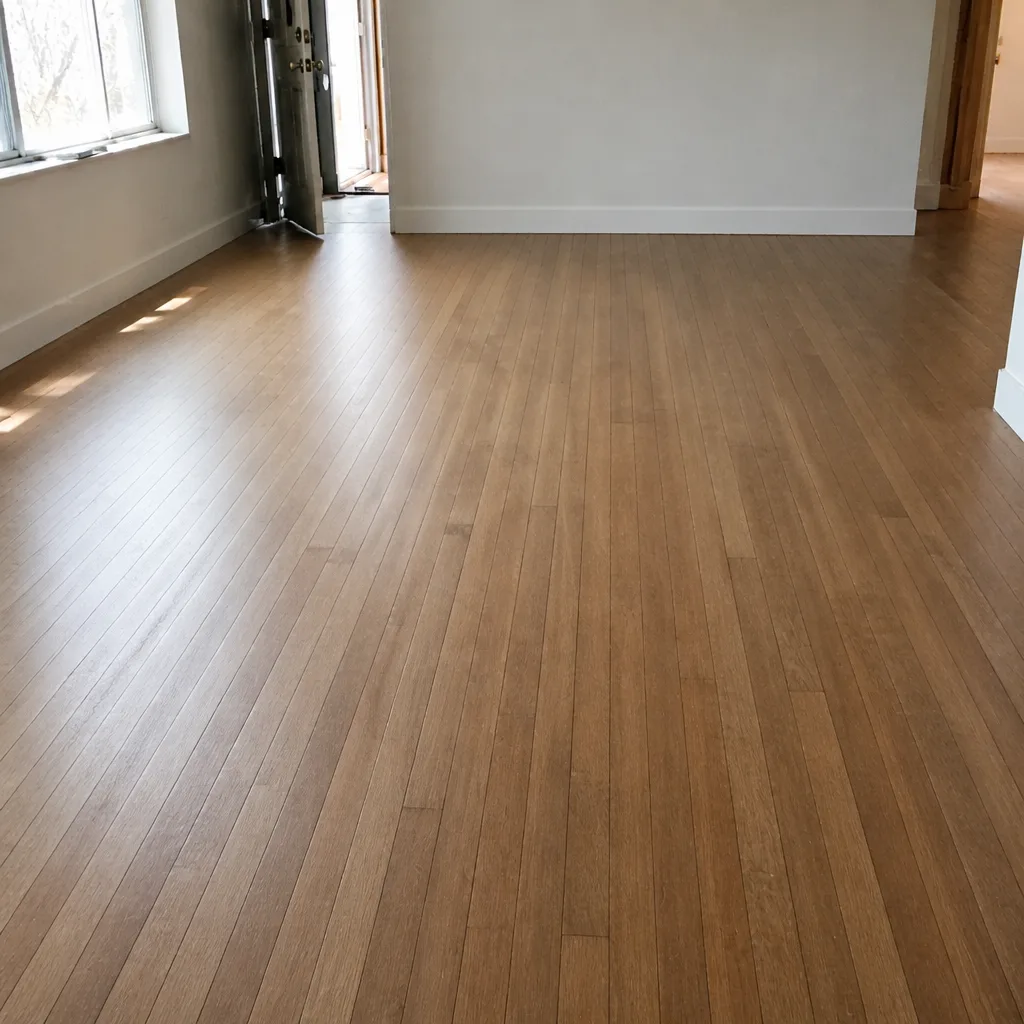
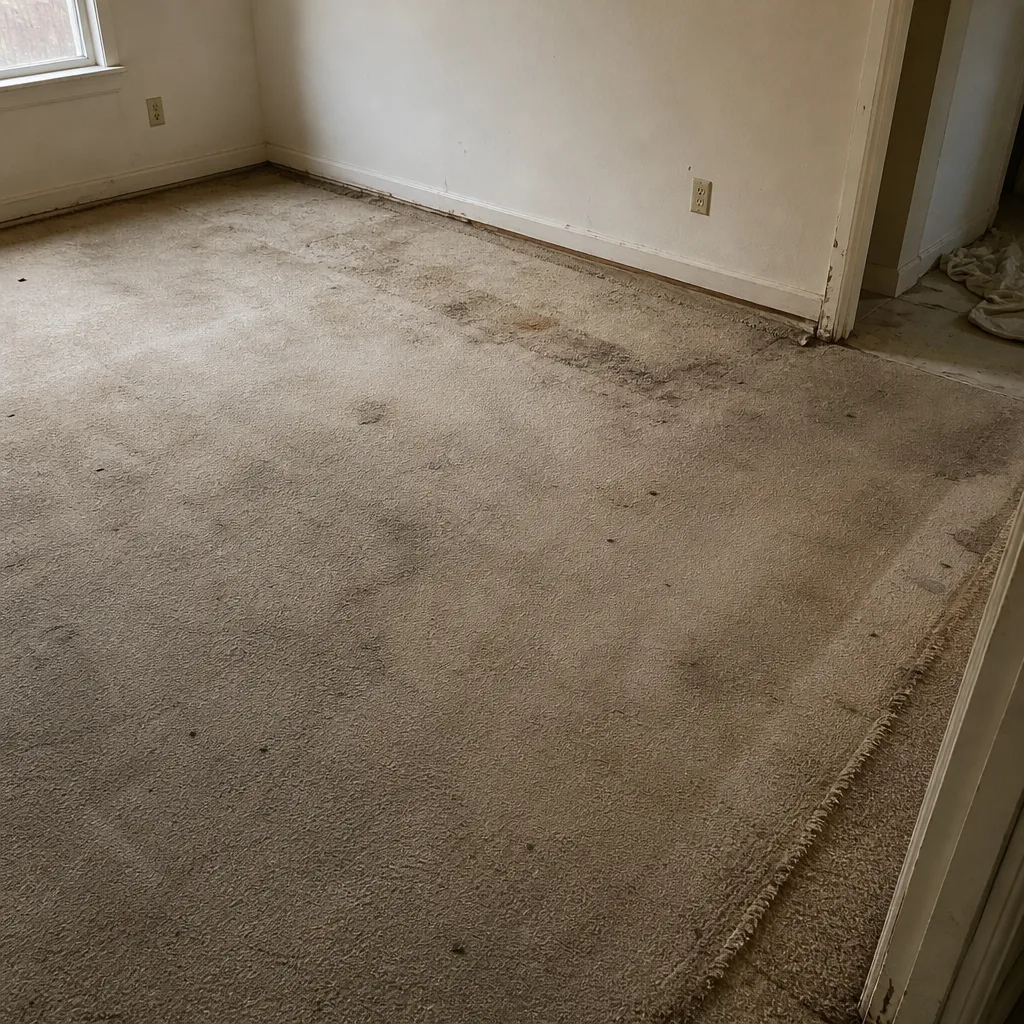
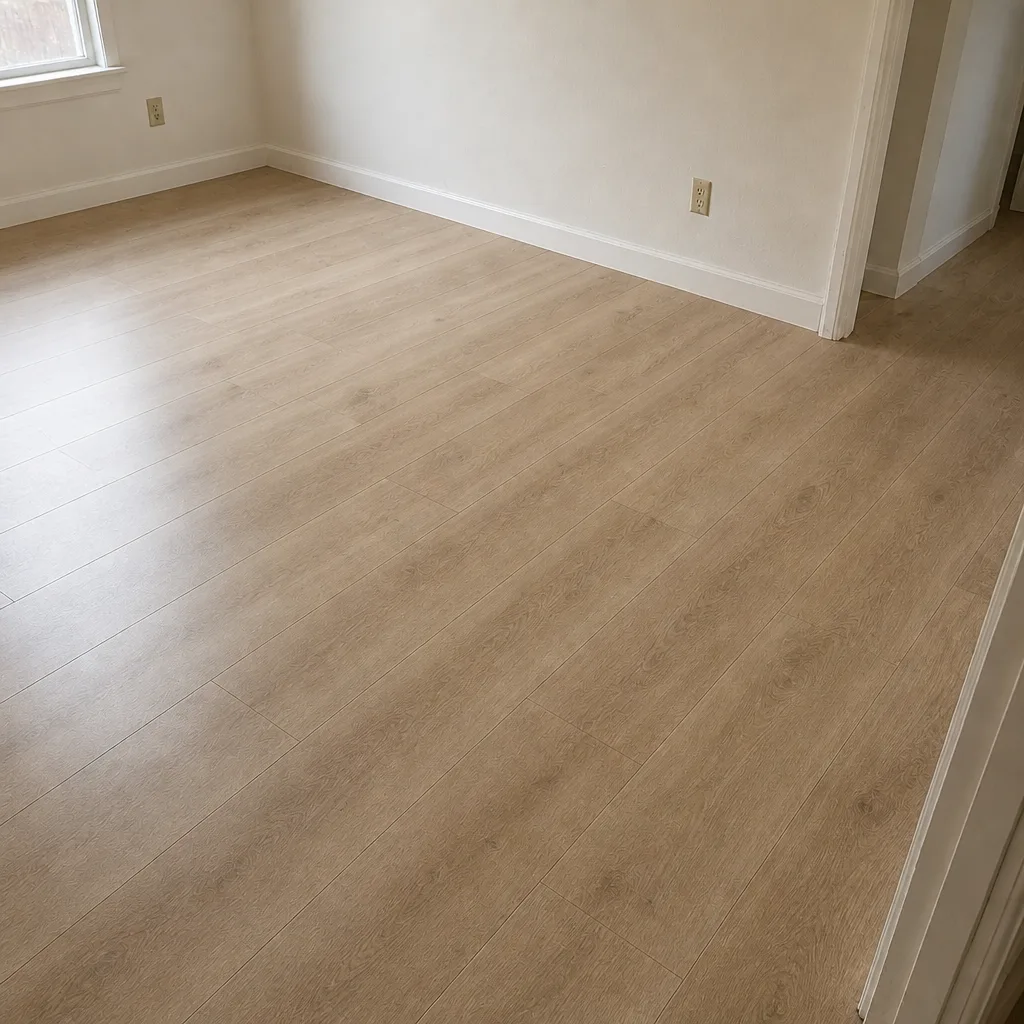
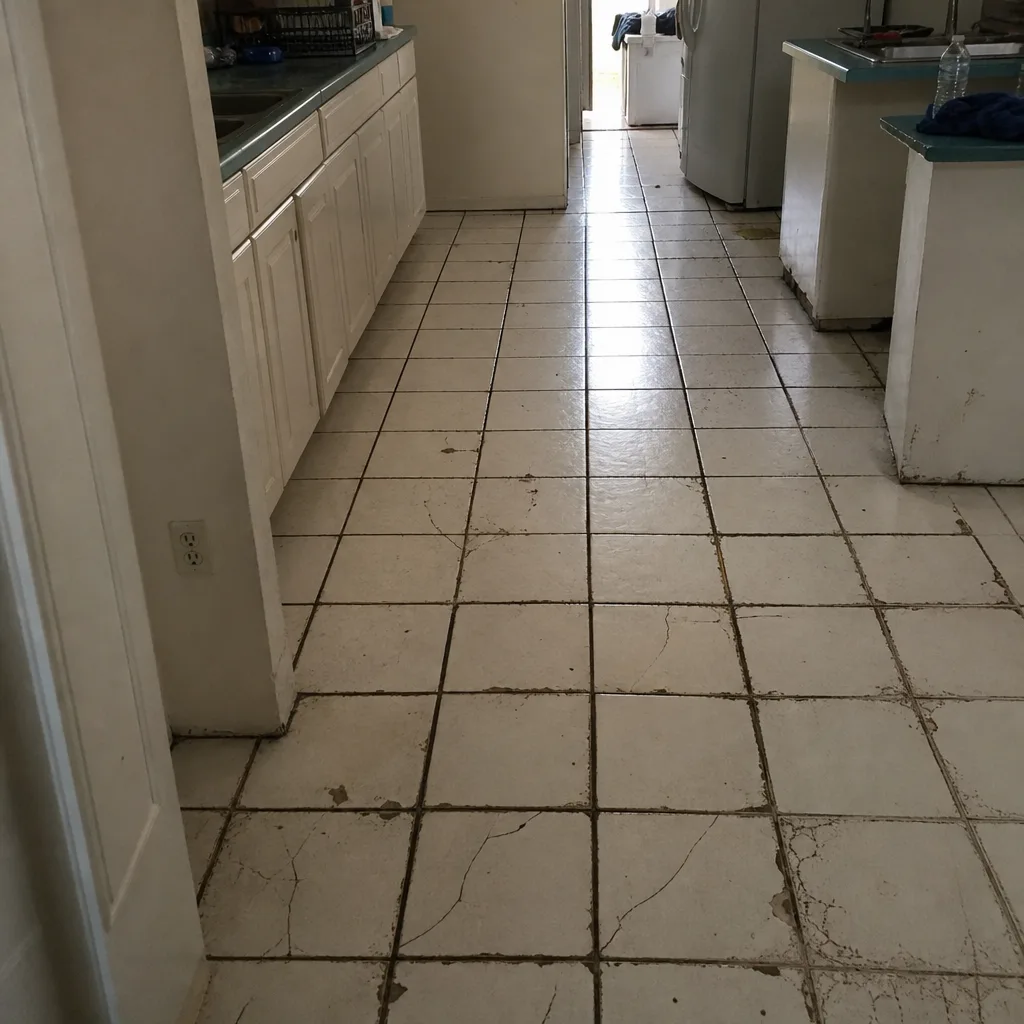
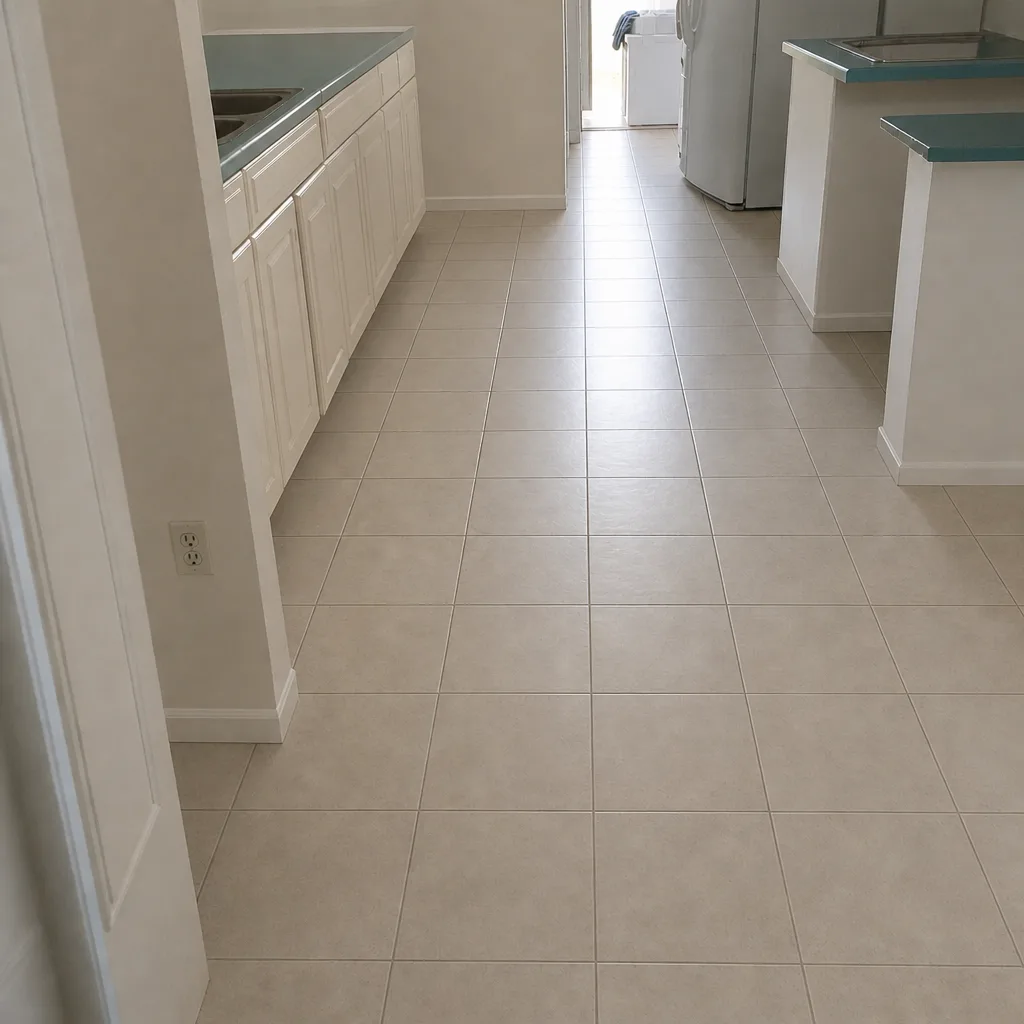
See the difference
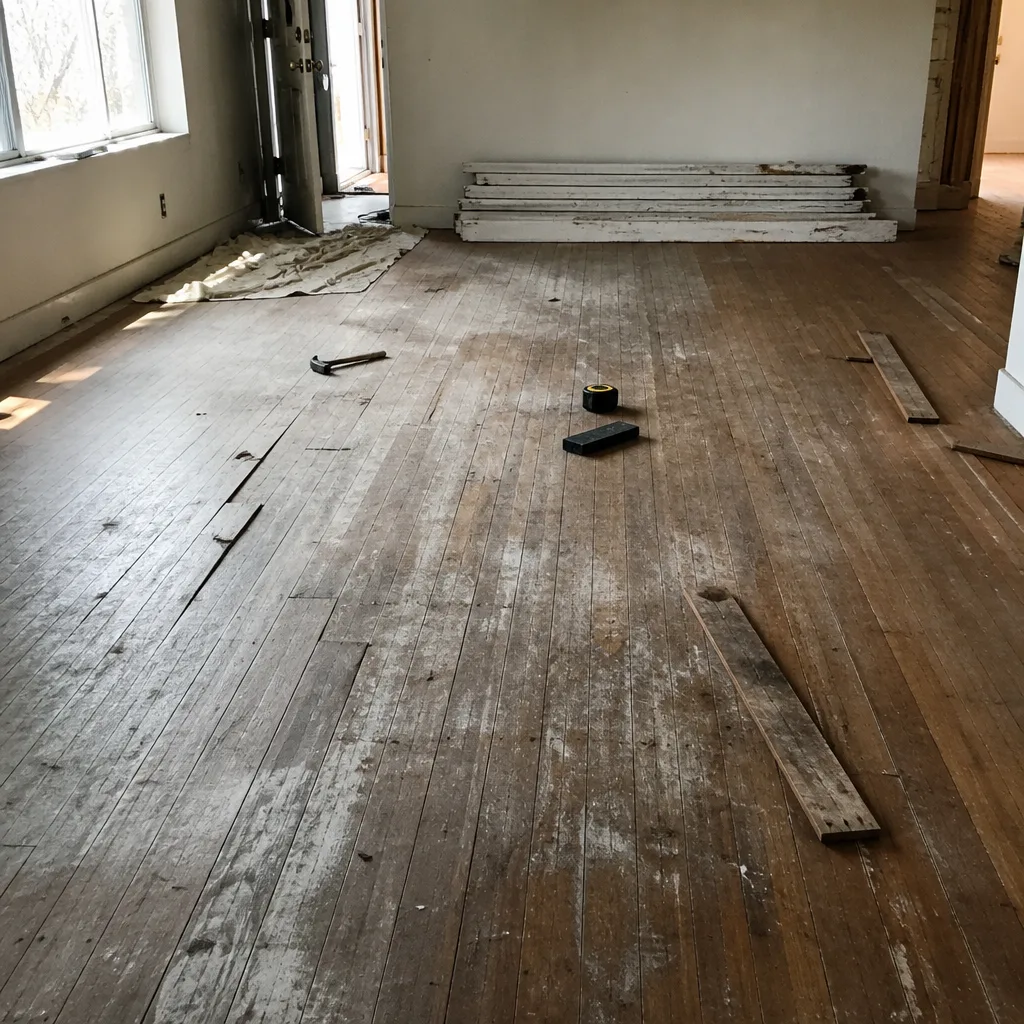 Before
 After
 Before
 After
 Before
 After
When to Call a Professional
Some flooring questions are easy to answer on your own. Others aren’t, and guessing is expensive. Call a professional when you’re dealing with a slab that may have moisture issues, when you’re refinishing hardwood and don’t know whether the wood has enough thickness left, when a previous installation is failing and you need someone to diagnose why, or when you’re renovating multiple rooms and want one contractor to coordinate carpet, tile flooring installation, and hardwood refinishing together. Also call when you’ve gotten three quotes and can’t tell them apart: an estimator who walks the home and explains the differences in writing is the one to hire. Floors Las Vegas offers free estimates in Las Vegas. Our technicians have up to 11 years of experience, and the estimate is a conversation about your home, not a pitch. Call (844) 761-9353 to schedule yours.
Frequently Asked Questions
Search the company’s business name on the Nevada State Contractors Board website and confirm an active C-20 flooring classification whose name matches your quote and contract. The check takes about two minutes, and it’s the most reliable filter you have. If the name on the license doesn’t match the name on the contract, ask before you sign. Call (844) 761-9353 for a free estimate from a licensed Las Vegas team.
Many do, and that’s not automatically a problem, since plenty of reputable companies work with vetted installation crews. What matters is whether the contractor will tell you clearly, in writing, who is installing and who stands behind the work. Ask directly: “Are the installers your employees or independent subcontractors?” A straight answer and a name in the contract are what you’re looking for. Call (844) 761-9353 to talk through how we handle installation accountability.
At minimum, a Nevada flooring contract should specify the measured square footage, the subfloor prep included, the exact brand and SKU of materials, the manufacturer and workmanship warranties, the payment schedule tied to milestones, and the change order process. A one-page quote with a total and no details isn’t a contract. Ask for the full document before any deposit. Our written estimates cover all of these, and they’re free – call (844) 761-9353.
Costs vary by product, room count, and subfloor condition, which is why the estimate visit matters more than any general price range. A free in-home measure and written estimate is the honest way to know what your project will cost, and the estimate sets the final price. Call (844) 761-9353 to schedule yours.
Often yes, but it depends on the thickness of the wood and its condition, both of which get checked during an estimate visit. Refinishing is usually less expensive than full replacement and preserves the original floor, but not every floor has enough material left to sand again. Call (844) 761-9353 for a free assessment of what your hardwood can handle.
The schedule is set at the estimate, after the measure and product selection are complete, since it depends on square footage, product, and prep work. There’s no honest way to promise a timeline before the home has been measured. The written estimate will include the expected schedule. Call (844) 761-9353 to get yours started.
The Bottom Line
Hiring a flooring contractor in Las Vegas comes down to verifying what’s verifiable and asking the questions most homeowners don’t think to ask. Check the C-20 license in two minutes. Ask whether the installers are employees or subs. Read the contract for square footage, SKU, subfloor scope, and payment milestones. Treat vague quotes and cash-only deposits as what they are: signals to walk away. Then choose the contractor who talks about slab condition, desert climate, and product fit instead of rushing you to a decision. In a market where Las Vegas renovation volume creates room for unlicensed operators, the vetting process is the difference between a floor that lasts and one you’re replacing in three years.
When you’re ready to talk through your project, Las Vegas homeowners can reach us at (844) 761-9353. We answer 24/7. Fast dispatch from 7am to 7pm, Sunday through Friday. Estimates are free, and the written estimate sets the final price.
Written by the team at Floors Las Vegas.